
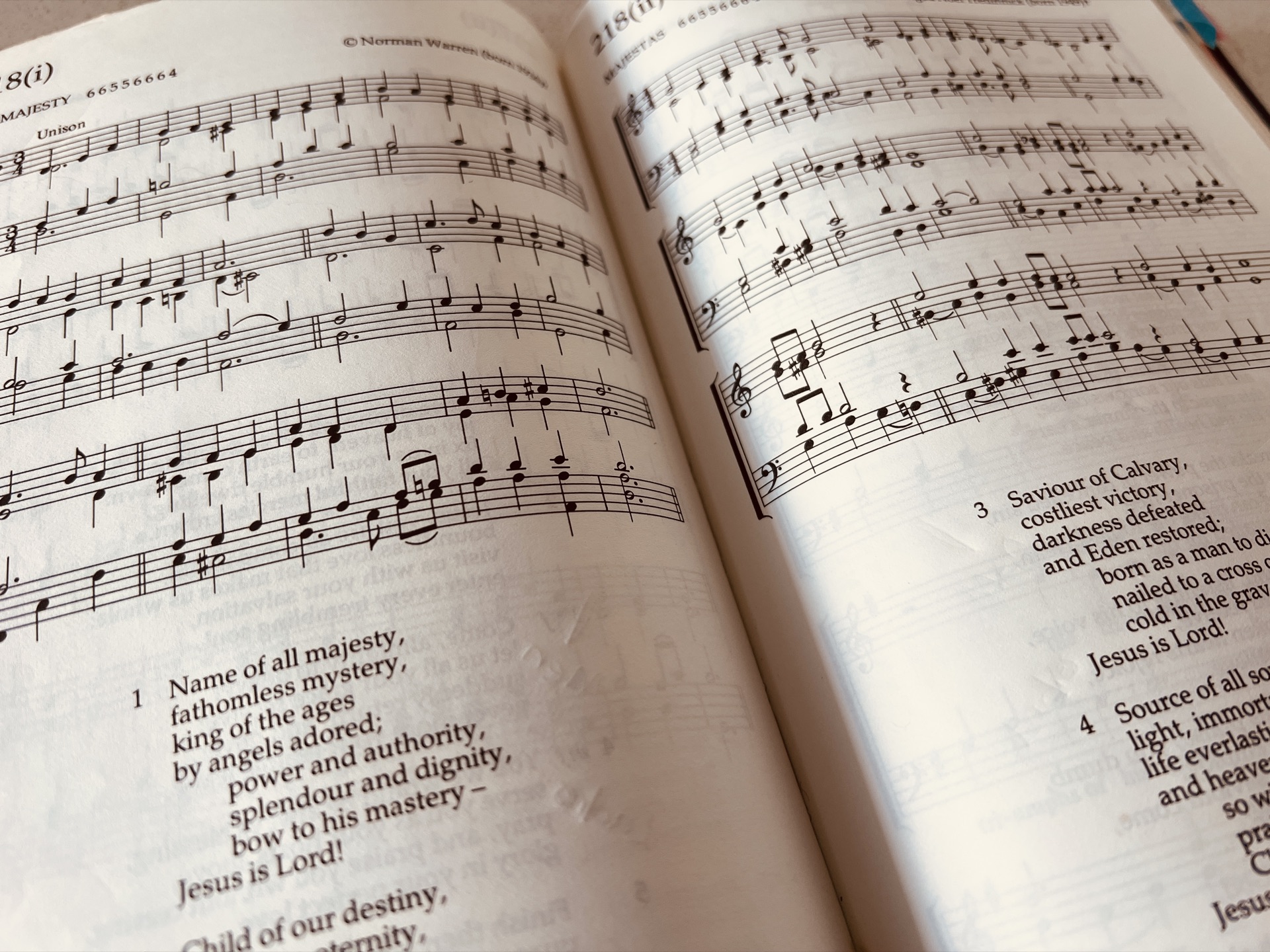
My first experience as a church pianist was unpaid, unplanned, and deeply humbling.
My choir conductor's organist, an older gentleman, fell ill. The conductor knew I played piano and asked me to cover a rehearsal. I was confident. I grabbed the books. I said let's go.
Then I opened the first chorale.
The music looked difficult, but I thought I could manage. What I did not expect was the tempo. I could have handled this at 60 beats per minute. They were going at least at 100. I was late on every single beat. The conductor looked at me, smiled, and said "let's go again." My face turned red. I was mortified.
On the second attempt I made a decision: I would only play the right hand. I stayed in time. It was working. I felt a small wave of relief.
Then the conductor shouted across the room, looking directly at me: "More bass, please."
I froze. I finished the piece with just the right hand.
That experience changed how I understood harmony, how I practised, and eventually what I built in Piano Tree. This post is for anyone considering the church pianist role, or already in it and wondering why it is harder than it looks.
This post is part of the Piano Tree path series. For context on working with lead sheets and modern church styles, also read The Jazz Piano Path. For a recommended external resource, pianist and educator Rhonda Rizzo has written an excellent practical guide to the church pianist role which I recommend reading alongside this post.
The Lesson I Learned the Hard Way: Bass Is the Boss
That rehearsal taught me something I had never been told and had never read in any theory book: the bass is the boss of harmony.If you play C, E, G in your right hand, most people would say that is a C major chord. But the moment you change the bass note, everything changes. Put an A in the left hand and you have A minor seventh. Put an F in the left hand and you have F major with a seventh and a ninth. The three notes in the right hand have not moved. The harmony has changed completely.
The bass decides what the harmony is. Three identical notes in the right hand can be three completely different chords depending on what the left hand plays underneath them.
The conductor understood this instinctively. The choir could carry the inner voices. What he needed from me was the rhythmic pulse and the bass. Without the bass, the harmony had no foundation. Without the pulse, the choir had nothing to follow.
His instruction that day, given with patience and a smile, was the most useful harmonic lesson I have ever received: if it is too difficult, drop the inner voices. We have the singers. Stay on the beat and give me the bass.
I went home and practised intensively before the next rehearsal. Then the conductor changed the hymns.
That is when I would have given anything to be a master sight reader.
Why Sight Reading Is the Core Skill
The church pianist job is, more than almost any other musical role, a sight reading job.You will be handed music you have not seen before. Hymns change week to week. Special music arrives at the last minute. A soloist brings a piece the morning of the service. The choir director adds a new anthem to Thursday's rehearsal without warning.
In every one of these situations, the ability to read music fluently and accurately under pressure is not a useful bonus skill. It is the primary qualification. A church pianist who cannot sight read confidently will spend the job in a permanent state of anxiety.
At that rehearsal I would have given anything to be a master sight reader. Sight reading would have helped me in every single one of those situations. It still would today.This is why I consider Piano Tree directly relevant to anyone pursuing or already in a church pianist role. Daily structured sight reading practice, across a wide variety of styles and difficulty levels, is the single most effective way to build the fluency the job demands. And unlike many musical skills, sight reading responds quickly to consistent daily practice. Four to six weeks of serious daily work produces noticeable improvement.
The Five Levels of Church Piano Reading
Church music comes in several distinct formats, each presenting different reading challenges. Understanding what you will encounter and how to approach each one is essential preparation.- Level 1: Melody only: Right hand plays the melody line. Used for practice, for beginners, or when other musicians carry harmony.
- Level 2: Melody and bass: Right hand melody, left hand bass. The conductor's minimum requirement. Stay on the beat and give the bass.
- Level 3.5: Keyboard style hymns: Three notes in the right hand, one bass note in the left. The most common hymn book format and the most practical starting point.
- Level 4: Four-voice chorales: Two voices in each hand. More demanding to read but standard in many traditional congregations.
- Level 5: Bach chorales: Highly contrapuntal, each voice has its own melodic logic. The most demanding sight reading challenge in church music.
Beyond these five levels, you will also encounter:
Figured bass requiring realisation: A bass line with figures indicating the harmony. You fill in the inner voices from the figures. This is essentially the same skill as the historical practice, applied in a liturgical context.
Lead sheets requiring realisation: Melody and chord symbols, with the voicing left to the pianist. Common in modern and contemporary worship settings.
Figured bass with melody: The most complex format. Melody given, bass given with figures, inner voices to be filled in by the pianist in real time.
All of these different reading challenges are what originally inspired me to develop the harmony and counterpoint course, which addresses each of them systematically. They also directly shaped the level structure inside Piano Tree, which progresses through exactly these formats.
When you encounter a chorale that is too difficult to play in full, always prioritise in this order: pulse first, bass second, inner voices last. The conductor can work with pulse and bass. Inner voices can be dropped. The bass cannot.
Music Styles You Will Encounter
Traditional hymn booksFour-part hymns are written for singers, not pianists. The voice leading can produce chord transitions that feel awkward under the hands. When the tenor and bass parts are too far apart to reach comfortably with the left hand, bring the tenor up into the right hand alongside soprano and alto, and never drop the bass.
Play phrases like a singer would sing them, not chord by chord. Chords that are played as isolated blocks rather than as part of a flowing phrase sound choppy and lifeless. Listen to how the music breathes.
When playing as the sole accompanist, play the last phrase as an introduction before the congregation joins. When working alongside an organist, remember that the organ is the leader. Your role is to provide colour and fill. Improvise on the hymn. Add light flourishes at phrase endings. Never fight for prominence with the organ.
Praise bands
In contemporary worship settings, the pianist is part of a rhythm section alongside bass guitar and drums. The job here is harmonic support and rhythmic stability. You are the glue that holds the ensemble together.
This requires genuine comfort with lead sheets and the ability to improvise voicings in real time. The praise band context demands the same harmonic fluency as the traditional hymn context, just expressed through a completely different musical language.
Incidental Music and Solo Playing
Most churches require the pianist to play at several points in the service beyond the hymns.Prelude: Music played before the service begins. Ask at the outset how much is expected, as this can range from five minutes to fifteen or more. Gentle, worshipful, unobtrusive. This is not a recital.
Offertory: Music during the collection of the offering. Keep it quiet, with frequent cadences so you can end naturally when the collection finishes. Do not plan a piece with an inescapable ending that arrives at the wrong moment.
Postlude: The one moment where slightly more energy and drama are appropriate. This is the end of the service and the congregation is moving. Something upbeat and well-crafted serves well here.
Playing for the Choir
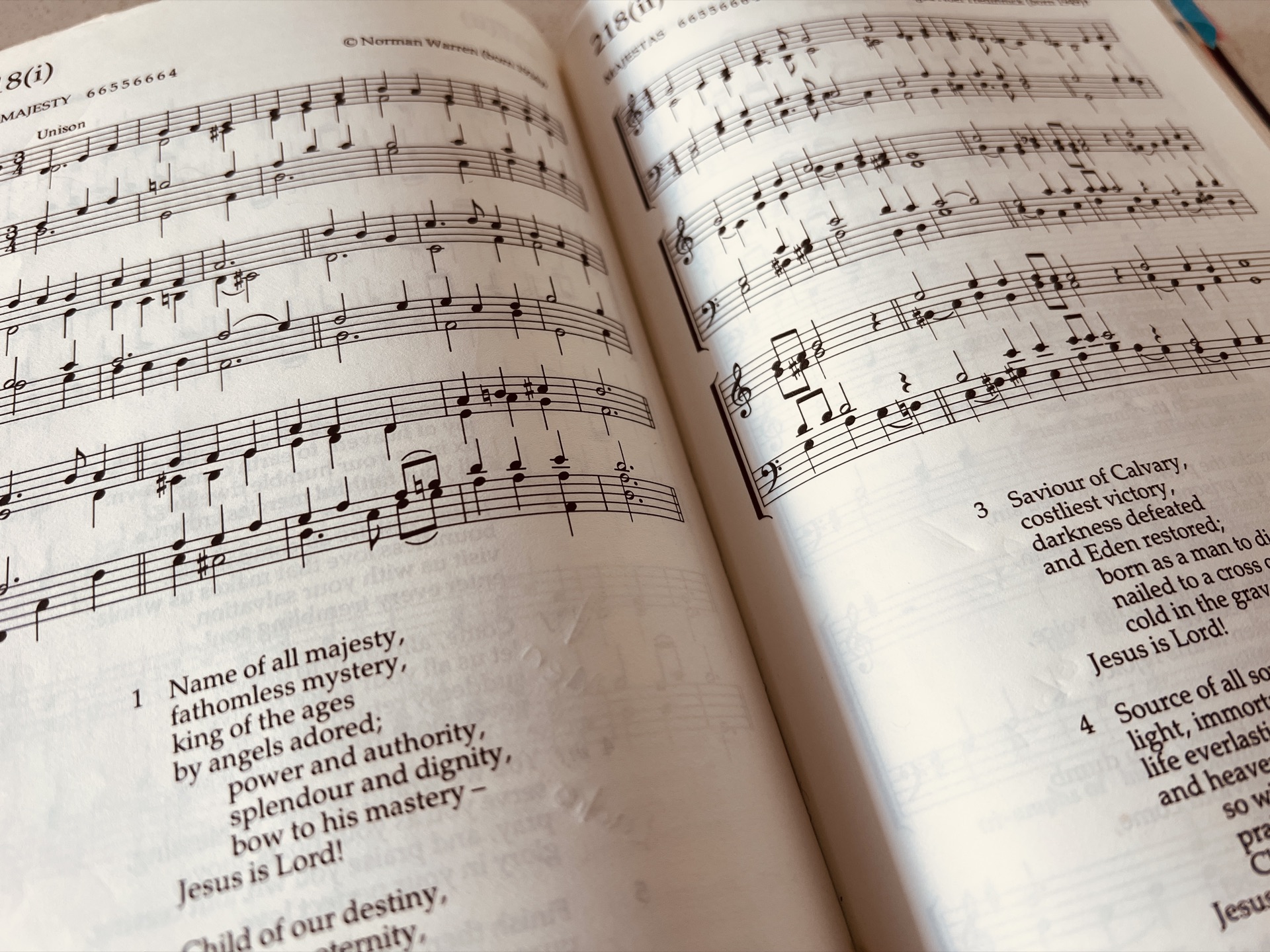
Nearly every church with a choir will expect the pianist to play for weekly rehearsals, usually on a weeknight, as well as a shorter warm-up before Sunday services.
The choir rehearsal job is largely about playing vocal parts so the singers can hear their lines. This is different from playing the accompaniment as it will be heard in performance. You will often be asked to play a single voice part, or two voices in combination, slowly, at different pitches, for different sections of the choir.
This demands flexible, responsive reading. The director may stop and restart constantly. You follow immediately. You do not lose your place.
The choir rehearsal is where sight reading fluency shows most visibly. A pianist who cannot find their place instantly after a stop makes the conductor's job significantly harder. A pianist who can makes themselves indispensable.
Accompanying Soloists
Soloists in church settings range from trained professional singers to well-meaning amateur instrumentalists who have been asked to provide special music. Your job is the same in both cases: make them sound as musical as possible.This means listening more than playing. Following their breathing. Supporting their tempo rather than imposing your own. Adjusting your dynamic balance so they are always clearly heard. Knowing when to be simple and when a small harmonic colour can add something meaningful.
Soloist accompanying is a collaborative skill that develops over time. The more you do it, the better your instincts become for how much to give and when to step back.
Working Relationships: Clergy, Director, Congregation
The clergyMost clergy have specific ideas about how music should function in their services. Some choose the hymns themselves to match the sermon. Many have preferences about tempo and dynamic level. This is their service and their congregation. Your job is to serve that vision as skillfully as you can, not to impose your own musical preferences.
The music director
The choir conductor or praise band leader is your direct supervisor in musical matters. Accept their leadership. Even when you disagree with a musical decision, express it once through appropriate channels and then support whatever direction they choose. A church music environment depends on trust and collaboration.
The congregation
In every congregation you will find people who are genuinely moved by the music and grateful for it. These are the listeners who stay for the entire postlude, who find you at coffee hour to tell you that a particular piece touched them. These people are why the job is worth doing.
You will also encounter one or two chronic complainers in almost every congregation, people who will tell you the hymns were too fast or too slow, too loud or too quiet, week after week. Treat them with grace, limit the time you spend with them, and remember that you answer to the clergy and the director, not to individual members of the congregation.
Modern Churches: Gospel, Jazz and Lead Sheets
Many contemporary and charismatic churches use music that draws heavily from gospel and jazz idioms. Syncopated rhythms, seventh chords, extended harmonies, call and response patterns between the pianist and the singers or the band. For these settings, harmonic fluency and comfort with lead sheets are essential. The skills described in The Jazz Piano Path apply directly here: chord extensions, voicing choices, rhythmic feel, and the ability to realise a lead sheet with genuine musical intelligence rather than mechanical execution.Gospel piano in particular has its own rich vocabulary of left hand patterns, blue notes, and call and response figures that reward dedicated study. If you are working in or considering a contemporary church position, time spent learning this vocabulary will pay dividends immediately.
How Piano Tree Supports Church Pianist Training
The level structure inside Piano Tree was directly shaped by the challenges of church piano playing described in this post.Level 1 builds melody reading. Level 2 adds the bass, the conductor's minimum requirement. Level 3.5 introduces keyboard style hymns with three voices in the right hand and one in the left. Level 4 moves to full four-voice chorales with two voices per hand. Level 5 addresses the Bach chorales, the most contrapuntally demanding sight reading challenge in the standard church music repertoire.
Beyond the level structure, Piano Tree's daily practice format builds the consistency that sight reading improvement requires. The variety of styles and the real-time feedback system mean that weaknesses are identified and addressed rather than reinforced through repetition.
The church pianist job rewards preparation. Every hour of sight reading practice before you take the role is an hour you do not spend with a red face at the piano while a conductor smiles patiently and waits.
Build the sight reading fluency the church pianist job demands with Piano TreeThis post is part of the Piano Tree path series. Explore the other professional directions: The Classical Diploma Path, The Jazz Piano Path, The Composer Path, and The Piano Teacher Path. For an excellent practical overview of the church pianist role, also read Rhonda Rizzo's guide.