
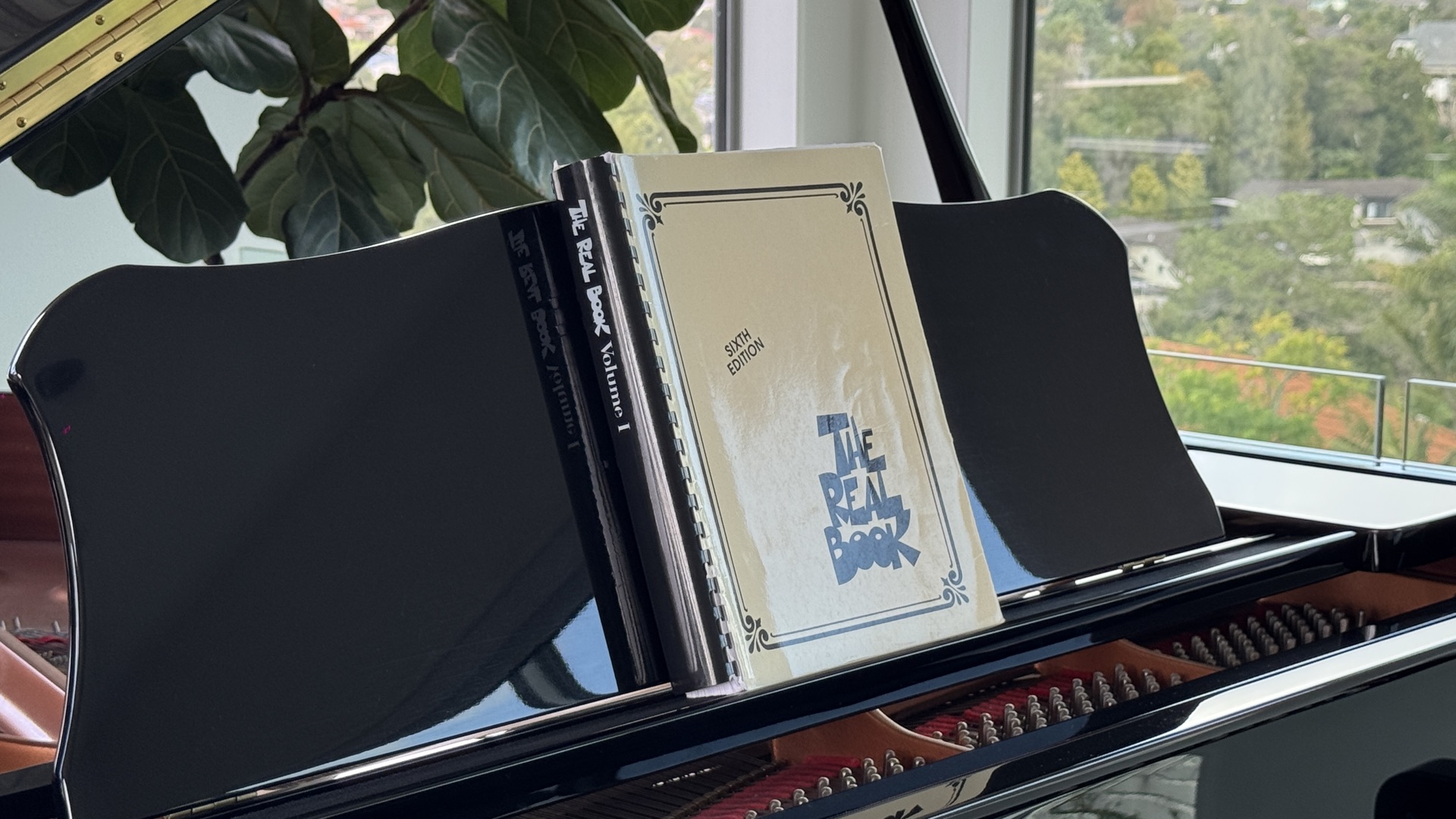
Jazz piano is one of the most rewarding musical paths a pianist can take. It is also one of the most misunderstood. Many students arrive wanting to improvise immediately, without realising that the freedom jazz requires can only come from a foundation that is already solid. The greatest jazz pianists are not just great improvisers. They are musicians with refined technique, strong reading ability, and years of disciplined harmonic study behind every seemingly spontaneous note they play.
This post is part of the Piano Tree path series. For context on how the earlier years of training lead here, see The Ideal Piano Training Part 4: The Professional Years.
I made a rule for myself after a particularly difficult teaching experience: I do not teach jazz unless the student is at least ABRSM Grade 5 standard. They do not need to have taken the exam. But they need to have the level. Without it, the work is painfully slow for everyone involved.
This post explains why, and what the jazz training path actually looks like once those foundations are in place.
The Prerequisites: Why Grade 5 is the Minimum
A student once came to me wanting to learn jazz. He could not read music at all. Teaching him was genuinely difficult. I had to speak to his mother and ask her to get him a subscription to Piano Tree for intensive daily sight reading training. He committed to it seriously. After about six months of that work we began studying tunes, because by then he could at least read a melody with his right hand. That basic reading ability was non-negotiable for me as a teacher. Without it, I had no way to show him the many different ways of realising a lead sheet.In those six months we also worked on triads, inversions, and simple harmonisation of easy lead sheets: nursery rhymes, national anthems, simple hymns. The harmonic and reading foundations had to be built simultaneously.
It is very difficult to learn improvisation when you are still battling with how to place your hand on the piano. Technique should already be natural before jazz study begins.
That experience confirmed something I had suspected for a long time. The Grade 5 standard is not an arbitrary threshold. It represents the point where a student has enough reading fluency, enough technical ease, and enough harmonic awareness to actually absorb what jazz demands of them.
Technique Must Already Be Natural
The best jazz pianists produce a genuinely beautiful sound at the instrument. This is not luck or coincidence. It is years of polishing correct technique, to the point where the mechanics of playing are no longer something the conscious mind has to manage.This matters enormously for jazz, because jazz requires the mind to be free. Free to hear what is happening harmonically, to respond rhythmically, to make melodic decisions in real time. None of that is possible if a portion of your mental bandwidth is still occupied by how to hold your hand or where to place your fingers.
There will always be small technical challenges even for advanced players. When studying bebop scales, for example, which are eight-note scales, you will need to pause and devise fingerings that work for you. But a pianist with solid foundational technique will solve that fingering problem in a short time and move on. The underlying physical ease is already there.
Without that ease, every new technical demand in jazz becomes a bottleneck that slows harmonic and rhythmic development to a crawl.
Why Reading Ability Matters in Jazz
Jazz improvisation is often described as spontaneous composition. That description is accurate, but it obscures something important: improvisation is not random. It draws on internalised patterns, memorised vocabulary, and an imagined musical language that the improviser hears in their mind before they play it.When improvising, you often imagine the score in your mind. That internal image comes from having seen music written down before. You cannot imagine clearly what you have never encountered.
Aural memory is equally important, and I will return to that. But reading ability creates a kind of internal musical library. The student who has spent years reading a wide variety of music has encountered thousands of melodic shapes, rhythmic patterns, and harmonic movements. All of that becomes material for improvisation.
The student who cannot read has a much thinner library to draw from. That is the practical consequence.
There is also a rhythmic dimension that is easy to underestimate. Reading music trains rhythmic thinking in a way that little else does. A student who has spent years reading music in time understands where notes fall within a bar, how syncopation functions, and how to place rhythmic events with precision. Someone who genuinely feels a four-four bar in quavers has no difficulty with anticipations, which means playing an eighth note just before beat one of the next bar. That anticipation is completely idiomatic in swing music. Students who have not developed their rhythmic thinking through reading often struggle with it for a long time.
The Harmony Training Sequence
Assuming the student has reached the necessary standard, the jazz harmony training follows a clear progression. Each step must be genuinely mastered before the next begins.
Stage 1: All major and minor triads
Every major and minor triad in all twelve keys, in root position. The goal is automaticity, not just correctness. The student should be able to produce any triad instantly without thinking.
Stage 2: Inversions of all triads
The same triads in all inversions. This is where hand position efficiency develops and voice leading begins to make physical sense.
Stage 3: Diminished, augmented and suspended triads
These expand the harmonic vocabulary significantly and are essential for jazz realisation.
Stage 4: Harmonising lead sheets with triads only
At this stage the student takes very simple lead sheets and harmonises the melody using only triads. Start with material you almost know from memory: nursery rhymes, hymns, simple anthems. The simplicity of the melody keeps the cognitive load low enough for the harmonic decisions to be the focus.
Stage 5: Adding the seventh
Begin by adding the seventh only to dominant chords. Then add it to minor chords. Finally to major chords. Each addition should be practised in harmonisation before moving to the next.
Stage 6: Chord progressions
The fundamental progressions of jazz: I IV V in major and minor, the ii-V-I, the vi-ii-V-I, and all their common variations. These must be practised in all twelve keys. Not understood in C major and vaguely familiar elsewhere. Mastered in every key.
Piano Tree has six volumes of voicings available in lead sheet format. The app first asks you to read the voicing, then makes the bar invisible to test whether you have genuinely internalised it. This is exactly the right training method for voicing mastery.
Stage 7: Voicings, walking bass, pentatonic and blues scales
Once basic harmonic mastery is in place, the student expands into more sophisticated voicings, learns to construct a basic walking bass line, and works through the pentatonic and blues scales as compositional and improvisational tools.
Fixing Jazz Rhythm: Two Essential Exercises
Rhythm is where many technically capable pianists fall apart in jazz. The harmonic knowledge is there, but the swing feel is not. These two exercises address that directly.Exercise 1: The blues scale in triplets
Take the jazz blues chord progression. In F, this runs:
| F7 | Bb7 | F7 | F7 | Bb7 | Bdim7 | F7 | D7 | Gm7 | C7 | F7 D7 | Gm7 C7 |
Play the blues scale ascending across bar one and stop on bar two. Descend across bar three and stop on bar four. Continue in this up-and-down fashion through the whole progression.
The crucial element: play the scale in triplets, placing an accent on the third note of each triplet, and a ghost note, meaning an extremely quiet note, on the first note of the following triplet.
- Week 1: Blues scale in straight triplets over the F blues, focus on the accent pattern
- Week 2: Same exercise but vary the entry point: start descending, start on bar 3
- Week 3: Apply to other keys: Bb, Eb, C
- Ongoing: Combine with left hand comping once the right hand rhythm feels natural
In my experience this single exercise fixes the jazz and blues rhythmic feel faster than almost anything else. The combination of the accent placement and the ghost note creates the physical sensation of swing rhythm in a way that simply playing along to recordings often does not.
Exercise 2: The Charleston rhythm with walking bass
The left hand plays the most basic walking bass pattern: root, fifth, octave, root, but with a strong accent on beats two and four. Exaggerate the accent. Make it obvious.
The right hand plays the Charleston rhythm: a dotted quarter note followed by an eighth note.
This exercise is simple enough to use as actual accompaniment. Once it feels natural, you can accompany another musician with it. That is when you know the rhythm has been internalised, not just practised.
The two-and-four accent is the heartbeat of jazz. Building it into the physical habit of the left hand, while the right hand explores rhythmic placement independently, creates the coordination that jazz piano demands.
Enclosures, Bebop Scales and Diminished Scales
EnclosuresAn enclosure is the approach of a target note from both above and below, typically using a chromatic note on one side and a diatonic note on the other. They are one of the defining characteristics of bebop melodic language, and mastering them gives the student immediate access to a more sophisticated improvisational sound.
Piano Tree has a dedicated Sight-Reading Focus Pack covering enclosures, which provides structured material for building this vocabulary systematically rather than randomly.
Tango is also an unexpected resource here. Tango pianists are masters of ornamentation and enclosures, and studying tango piano writing develops the same physical vocabulary in a different stylistic context.
Bebop scales
There are typically three bebop scales in regular use: the dominant bebop scale, the major bebop scale, and the Dorian bebop scale. Each adds a chromatic passing note to a familiar seven-note scale, producing an eight-note scale that places chord tones on strong beats when played in eighth notes.
The fingering challenge here is real but manageable. A pianist with solid foundational technique will find workable fingerings quickly. The musical logic of these scales, once understood, makes them feel inevitable rather than arbitrary.
Diminished scales
The two diminished scale types, whole-half and half-whole, are essential tools for dominant chord situations and for creating tension over diminished chords. Their symmetrical structure means that patterns learned in one position repeat at every minor third, which significantly reduces the learning load once the logic is understood.
Which Scale Goes With Which Chord
This is the question students ask most often, and the honest answer is that there is no single correct answer. Context matters. The chord's function in the progression matters. The style and era of the music matters.That said, there are reliable starting points:
- Major chords: major scale, Lydian mode, major bebop scale
- Dominant chords: Mixolydian, dominant bebop scale, whole-half diminished, altered scale
- Minor chords: Dorian mode, natural minor, minor bebop scale
- Half-diminished chords: Locrian mode, Locrian natural nine
- Diminished chords: half-whole diminished scale
Learning these associations is not the end of the work. It is the beginning. The student then needs to play each scale over its chord repeatedly, in all keys, until the sound of that combination becomes familiar enough to be heard internally before it is played. That is when scale-chord knowledge becomes genuine improvisational vocabulary.
Playing Formats: From Solo to Big Band
Once the harmonic and rhythmic foundations are solid, all of the material should be applied progressively across different playing contexts.- Solo piano: Full harmonic and melodic responsibility: melody, harmony and bass in one arrangement
- Piano duo: One pianist comps while the other solos, then switch: develops listening and responsiveness
- Piano trio: With bass and drums: rhythm section coordination, leaving space, responding to the groove
- Quintet or big band: Reading parts, ensemble awareness, playing a supporting role within a larger texture
Each format makes different demands. Solo piano requires the most harmonic self-sufficiency. Playing in a rhythm section requires a different kind of listening. Playing in a big band requires the ability to read and count rests while maintaining internal pulse.
The student who has worked through all of these formats is ready for a jam session. That is the real test, and the real beginning.
Listening and Ear Training
Listening to jazz should happen every day from the very first lesson. Not as homework. As pleasure. The student who genuinely loves what they are hearing will naturally absorb the vocabulary, the phrasing, the rhythmic feel, and the harmonic language of jazz without needing to analyse it consciously.Transcribing solos is often recommended as a primary ear training tool. In my experience it is not as essential as many people suggest. I have had students reach the standard required for the University of Auckland jazz programme without ever doing formal transcription work. The ear training happened through a different route: transposing every concept to all twelve keys, playing with other musicians, and listening seriously over a long period.
When you transpose a ii-V-I to all twelve keys every week for several months, something shifts. You begin to hear that progression in recordings before your analytical mind identifies it. The ear and the hands have both learned it. That is genuine ear training, even if it does not look like traditional ear training.
That said, some students genuinely enjoy transcribing and find it motivating. Piano Tree includes ear training exercises if you want structured support in that direction. Use them if they appeal to you. Do not feel obligated if they do not.
How Piano Tree Supports Jazz Development
Several elements of the jazz training path described here connect directly to what Piano Tree is designed to do.The sight reading foundation that makes jazz study possible in the first place is built through Piano Tree's daily structured practice, real-time feedback, and automatic difficulty adjustment. The six volumes of voicings in lead sheet format develop harmonic internalisation through exactly the right method: read it, then recall it from memory when the notation disappears. The Sight-Reading Focus Packs for enclosures provide targeted vocabulary building. The ear training exercises are there when you want them.
Jazz is one of the most demanding and most rewarding musical disciplines a pianist can pursue. The path is long. But every stage of it is genuinely interesting, and the student who arrives with solid foundations, technique that is already natural, reading that is already reliable, and harmony that is already internalised, will find that the jazz vocabulary opens up faster than they expected.
More on advanced jazz topics to come in a future post.
Build the foundations that make jazz study possible with Piano TreeThis post is part of the Piano Tree path series. Explore the other professional directions: The Classical Diploma Path, The Composer Path, The Church Pianist Path, and The Piano Teacher Path.