
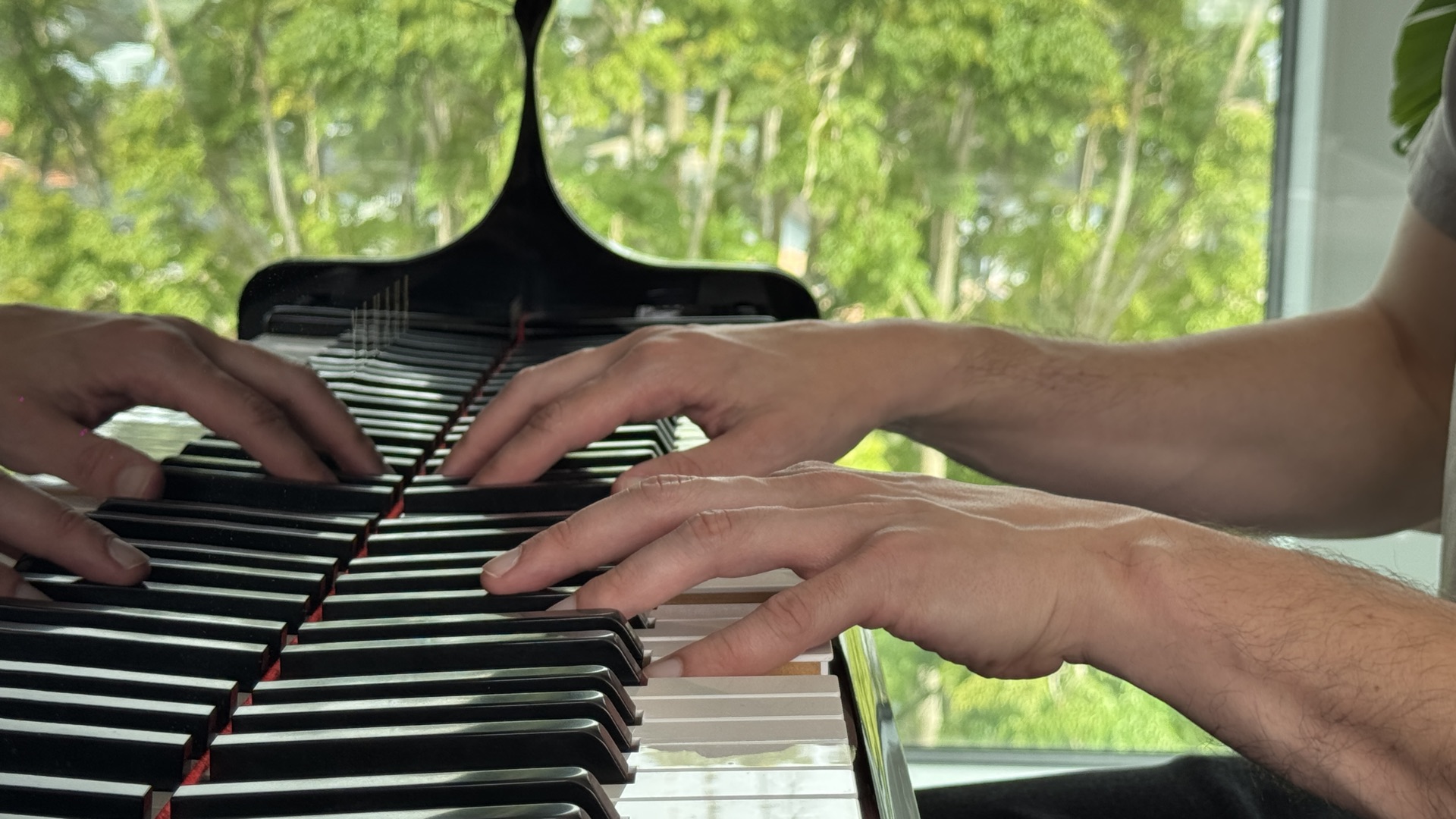
Here is an answer you probably were not expecting: piano is one of the easiest instruments to begin learning.
Not easy to master. Easy to begin. And that distinction matters enormously, because most people asking this question are not asking whether they can become a concert pianist. They are asking whether they can actually get started.
The answer is yes. Emphatically and without qualification.
Why Piano Is One of the Easiest Instruments to Start
The very first piece on the Piano Tree learning path is called Little Raindrops. It consists of pressing the note middle C four times in a bar.That is it. Four presses of one key.
Every human being on earth can press a button. A piano key is a button. You press it with the right amount of weight, not so lightly that no sound comes out and not so heavily that the sound is harsh, and you are making music with the instrument. From the very first attempt.
Piano is one of the easiest instruments to begin because producing a satisfactory sound requires almost no prior training. You press a key and the piano does the rest. That is not true of most instruments.
The mechanism of sound production on a piano is essentially hidden from the player. You do not need to learn how to bow correctly, breathe correctly, blow at the right angle, or position a reed. You press the key. The hammer strikes the string. Sound comes out.
How Piano Compares to Other Instruments
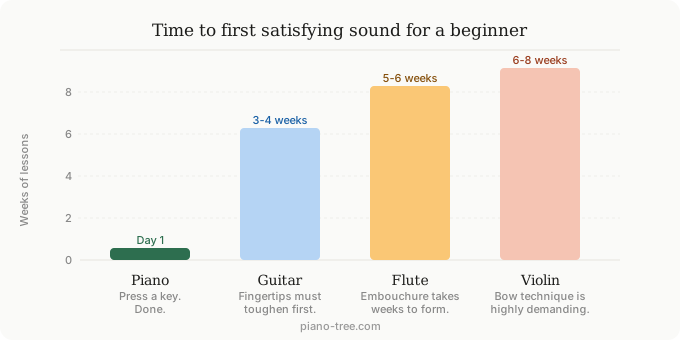
I have taken lessons in flute, violin, viola, guitar, and bass. I can tell you from direct experience that piano is unusual in how quickly a beginner can produce something worth listening to.
Violin: In my early violin lessons, producing a tone that was not a screech required weeks of work on bow hold, bow speed, bow pressure, and the angle of the bow on the string. The instrument is unforgiving. A slightly wrong bow angle and the sound falls apart completely.
Flute: I spent the first lesson blowing across the mouthpiece hole while holding just the head joint, trying to get any sound at all. Getting dizzy was a genuine occupational hazard. A full satisfying flute tone takes months to develop.
Guitar: Pressing down steel strings hard enough to produce a clean note is physically painful for beginners. The fingertips need to toughen up before playing becomes comfortable. This takes weeks.
Piano: You sit down. You press a key. It sounds like a piano.
The comparison is not meant to suggest that piano is always easier than other instruments overall. At advanced levels, the complexity of piano music is extraordinary. But at the beginning, the barrier to entry is genuinely low.
Finding the Notes: Chopsticks and Forks
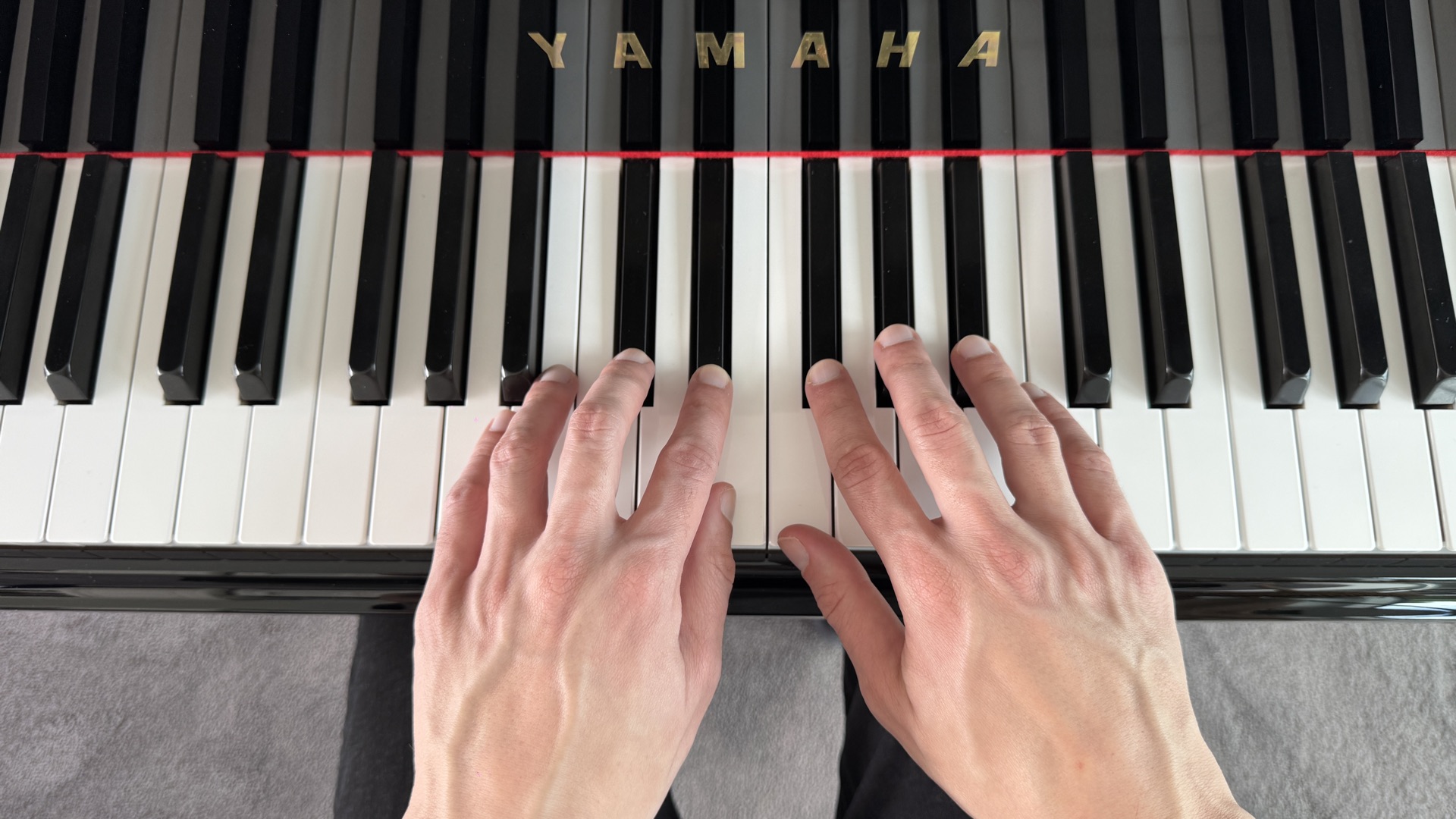
One of the first things a beginner needs to do is find their way around the keyboard. This looks daunting at first: 88 keys, black and white, apparently identical in repeating groups.
But there is a pattern, and once you see it, you cannot unsee it.
Look at the black keys. They come in groups of two and groups of three. Two black keys are chopsticks. Three black keys are a fork. Chopsticks start with C. Fork starts with F.
Two black keys: chopsticks. The white key immediately to the left of the two black keys is C. Find every pair of black keys on the keyboard and you have found every C.
Three black keys: a fork. The white key immediately to the left of the three black keys is F. Find every group of three black keys and you have found every F.
From C and F, every other note falls into place immediately. D is between the two black keys. E is just to the right of them. G, A, and B follow F in sequence. The whole keyboard becomes readable within a single lesson.
In my experience, most adult beginners can identify all the notes across the full keyboard by the end of their first session. The visual layout of the piano, once decoded, is genuinely intuitive.
Learning where the notes live on the keyboard is the first step. Reading music, understanding what the symbols on the page mean and translating them into sound, is what turns note-finding into actual piano playing. This takes time and consistent work from the very first lesson. A good teacher will introduce notation gradually alongside the physical skills, so that reading and playing develop together rather than separately. This is not an optional extra. It is one of the foundations of the instrument.
What About Reading Two Clefs?
The most common concern people raise about piano being harder than other instruments is that pianists must read two clefs simultaneously: treble for the right hand, bass for the left.This has some truth to it. A violinist only reads treble. A cellist only reads bass. A pianist reads both.
But in practice, most beginners do not find this as difficult as they expected. The reason is that you learn each hand separately before combining them. By the time you are reading both clefs together, each one is already familiar on its own.
Piano Tree introduces reading progressively. Level 1 focuses on melody only in one hand. The bass clef and left hand are introduced gradually, with real-time feedback at every stage. By the time both hands are playing together, reading each clef has already become natural.
The two-clef challenge is real but manageable. It is not a reason to avoid piano. It is simply one of the things you learn early on.
What About Hand Coordination?
The other concern beginners raise is hand coordination: two hands doing different things simultaneously feels impossible.Try this right now. Tap the table with your left hand, then your right hand, and repeat for a while. Then try tapping twice with your right hand and once with your left. Then try three times with your right hand and once with your left on the count of four.
If you can do that, you already have the coordination that most beginner piano music requires.
Piano at the beginning is not about hand independence. It is about hand interdependence. The two hands work together rather than against each other, in the same way you tap a rhythm with both hands when you are listening to music you love.
Hand coordination is one of the real challenges of learning piano, and it is worth being honest about that. Getting both hands to work together consistently takes time, regular practice, good teaching, and patience. What changes as you progress is the nature of that coordination. In the early stages the two hands are largely working together in a shared rhythmic framework, supporting each other rather than operating independently. That is genuinely manageable from the beginning with the right approach.
The more demanding kind of independence, where each hand is doing something rhythmically and melodically separate with its own distinct character, develops gradually over months and years. It becomes more complex around Grade 5 when you encounter Bach's two-part inventions, and increases further from there. Calling it easy at any stage would be wrong. But with a good teacher and consistent practice it is entirely achievable, one step at a time.
What a First Lesson Actually Looks Like
In a well-structured first piano lesson, most adult beginners leave knowing:- By minute 15: How to find every C and F on the keyboard using the chopstick and fork method. From there, all other notes.
- By minute 30: How to produce a good basic tone: the right weight and speed of key press, relaxed arm, natural hand position.
- By minute 45: Mary Had a Little Lamb in the right hand. A simple but complete melody.
- By end of lesson: Ode to Joy and Twinkle Twinkle Little Star. Three songs in one hour, from knowing nothing.
Three songs. All the note names. A basic understanding of how to produce sound on the instrument. All in the first hour.
I have taught many adult beginners and this is consistently achievable. Not because those students were exceptional. Because the instrument makes it possible.
When Does Piano Actually Get Hard?
The honest answer is that difficulty increases noticeably from around Grade 6, and can become extremely demanding after Grade 8. Diploma-level repertoire requires sustained technical control, deep interpretative maturity, and harmonic understanding that takes years to develop properly. Professional-level piano is extraordinarily demanding.The good news is that a student who reaches Grade 8 arrives there with the tools to handle what comes next. The foundations built across those years, secure technique, harmonic understanding, strong reading, consistent practice habits, are precisely what make the advanced work manageable. The difficulty does not appear from nowhere. It grows alongside the student's capacity to meet it.
Piano gets noticeably harder from Grade 6 and can be extremely challenging after Grade 8. But the Grade 8 student has spent years building exactly the tools they need to face that challenge.
The early years, from first lesson through to around Grade 6, are genuinely accessible and full of beautiful, rewarding music. Each level builds naturally on the last. Most students who practice consistently with good teaching make steady, satisfying progress.
The question "is piano hard to learn" has a better answer than yes or no. Piano is easy to begin and endlessly deep to master. You can walk out of your first lesson having played three songs. You can spend a lifetime and still find new things to discover.
Start with the first lesson. The rest will follow.
Starting the Right Way with Piano Tree
No app will ever replace a good teacher. If you are serious about learning piano, lessons with a qualified teacher are the foundation everything else builds on. Theory, technique, posture, and musical understanding develop through that relationship in ways no software can replicate. That said, what happens between lessons matters enormously. Piano Tree is a sight reading practice tool designed to complement lessons rather than replace them. Fifteen minutes of daily reading practice alongside your regular lessons builds fluency faster than occasional longer sessions, and having real-time feedback on pitch and rhythm makes that practice genuinely productive.Beyond sight reading, the library includes material that helps reinforce musical concepts your teacher introduces: chord progressions, cadences, lead sheet realisation, basic counterpoint, canons and more. It will not teach you music theory from scratch, and it is not trying to. But if your teacher has introduced a concept and you want to internalise it through structured repetition, the material is there.
The first step is always the hardest one to take. Once you have pressed that first key, the rest is just practice.
Start your first piano lesson today with Piano TreeFor more on what the piano learning journey looks like at each stage, read The Ideal Piano Training Part 1: The Early Years.