
A lead sheet gives you the essentials of a piece: the melody on the staff and the harmony as chord symbols. Reading it well is not playing those notes. It is understanding the phrase, recognising every chord instantly, and knowing which role is yours to play.
A lead sheet is the general picture of a piece. The same page can be read by a solo pianist and by every member of a band, each with a different job. A pianist can use it to play a tune alone, orchestrating the melody however they like or however their resources allow. The same music can sound simple or complex depending on the language of the player, who "arranges" the piece as they go.
I work from lead sheets most nights. What follows is what I explain when someone asks me where to start.
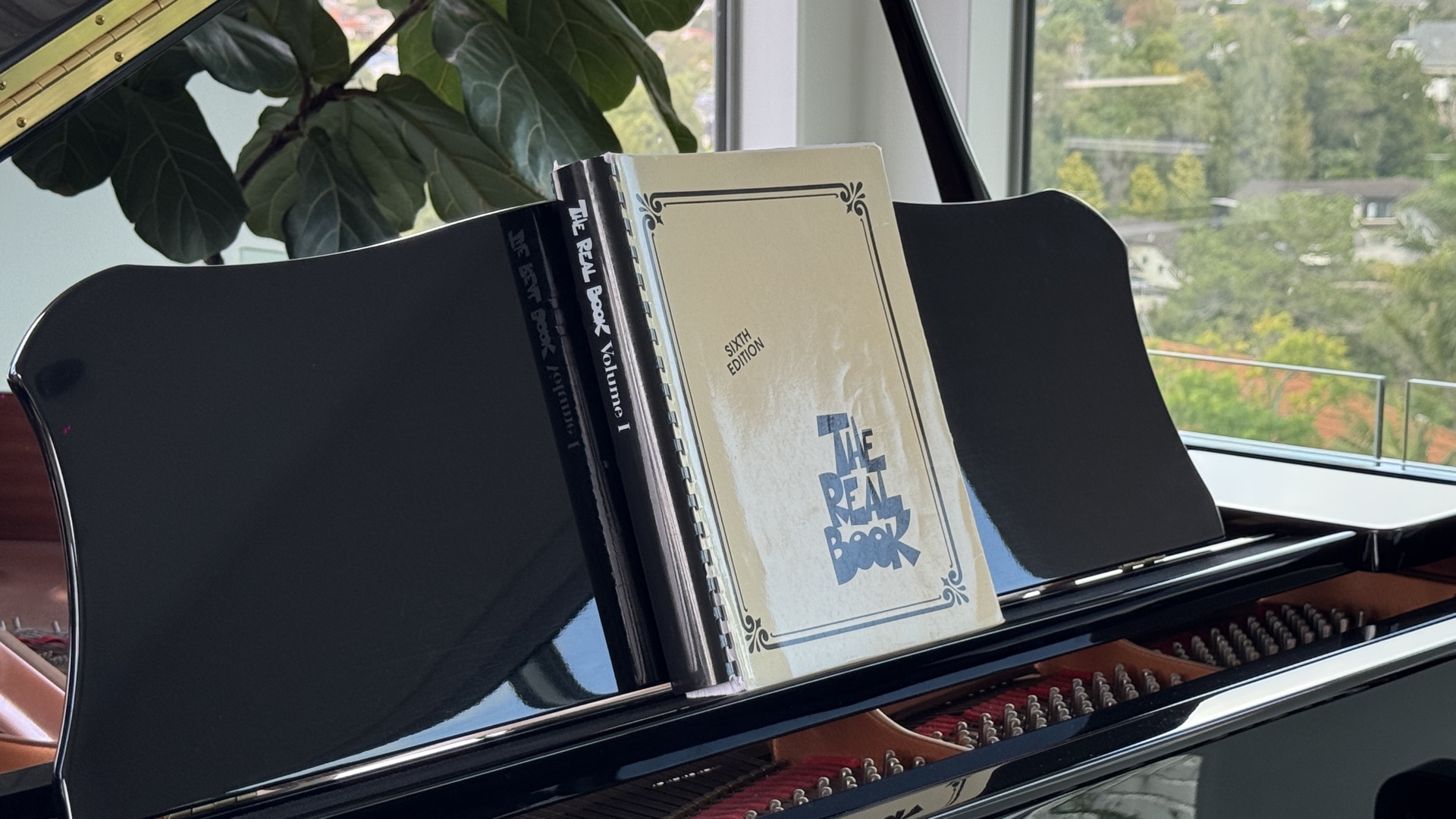
The Same Page, Three Different Musicians
Take a trio: piano, bass and flute. All three read the same lead sheet and take different things from it.The bassist uses the chord symbols to know which notes to play and how to shape the line. But the melody matters too: it is a guide for not getting lost, and it helps decide the character of each section.
The pianist uses the harmony to build the accompaniment, and the melody to know how to accompany it: where to add rhythmic density, where a fill fits between phrases, which register to stay in so as not to step on the tune.
The melodic instrument relies mostly on the melody, but also on the harmony: to improvise over the form, as jazz players do, or to build a countermelody on the chords when the piano takes the tune for a while.
Everyone reads the same thing. Nobody plays the same thing.
Is It That Different From a Traditional Score?
You could say both present the same information, but one demands a strict performance and the other leaves more room to create. The boundary is not as sharp as it looks, though. You can take a fully written score, extract its melodic and harmonic content and reinterpret it as an arrangement; classical pianists do exactly that in passages that are difficult or simply impossible for some hands. And a great deal of Baroque music was written over a figured bass, intended to leave the performer real freedom.For a long time, even among European academics, the score was an open format. That was lost with the editions and editors of the post-Romantic era, replaced by the idea that a score stores instructions for pressing keys. Institutions pushed in the same direction: producing musicians whose performances were ever more "perfect", rather than musicians who read with understanding and can reinterpret what is written.
It is the old primary-school dilemma: memorise, or understand the concept? The lead sheet is the concept map, the summary. Working from lead sheets puts you face to face with the need to create.
You interpret what is written and you create what is implied. That forces you to understand the context.
The Melody: Read in Phrases, Not Note by Note
The melody on a lead sheet is not just an instruction about which notes to play so that it "sounds". You have to interpret the phrases and recognise the form, because everything is, in a sense, open. If you are going to play the melody, bear in mind that it is usually written plainly, and that you can and should phrase it, ornament it, move it between registers or orchestrate it.The ability to read in phrases rather than note by note comes one way only: by reading, reading and reading. It helps enormously if the material is in order. In Piano Tree, the Jazz section is built exactly that way: phrases classified by rhythm and sequenced by harmonic development, moving from simple triadic phrases to phrases built on four-note chords, enclosures and chord extensions. That progression creates a strong association between melodic content and the harmony underneath it, and introduces melodic tensions and their resolutions gradually. It is not only for jazz players. Any musician who wants to read melodies with understanding benefits from it.
Chord Symbols: Recognise and Play Without Thinking
The starting point is recognising each chord symbol instantly. And not only recognising it: playing it at the piano without any verbal thought in between. It has to be automatic. If a pianist sees a chord symbol and stops to "build" the chord, the music, unfortunately, will not stop to wait.Knowing a chord has many levels. The same lead sheet can be played with simple root-position triads at first, and the same pianist, years later, can play that same page differently, with extended chords and a sense of orchestration.
Piano Tree's Chords and Scales Training walks that path in order: basic triads, scales, advanced triads, open triads for the left hand, four-note chords. Practising it is essential for building an automatic stimulus-and-response relationship with chord symbols, and that clears space in your head for creativity and musicality. Once you are no longer thinking in notes and numbers, there is room for taste, and everything becomes more rewarding.
The Roles: Bass, Accompaniment, Melody, Countermelody
Reading a lead sheet is like giving a talk from an outline. Imagine you are about to give a speech you have not written out word for word, but you have noted the main ideas so you do not get lost. What matters most? Knowing the subject. You cannot speak about something you do not know.With a lead sheet, knowing the subject means three things:
- Reading a melody and understanding it, which involves a great deal more than being able to play it.
- Interpreting the chord symbols. Knowing every chord is the first step. Chords form progressions, and knowing the progressions puts you one layer of context ahead.
- Knowing the orchestration roles and being able to hold your own improvising in each one: bass, accompaniment, melody and countermelody.
Depending on whether you play alone or with others, you will have to cover one or several of those roles at once. Solo piano, all four. In a trio, perhaps two, and they change from one chorus to the next.
Train melody reading and chord symbols with real material on Piano TreeThe Short Version
A lead sheet does not tell you what to play. It tells you what is there. The melody is the idea, the chord symbols are the context, and what comes out is whatever you know how to do with the two. That is why reading lead sheets is not a separate skill from sight reading. It is the same skill, with more room to decide.For related reading, see How to Learn Harmony at the Piano, Why I Won't Teach Jazz Until Grade 5 and How to Become a Cruise Ship Pianist.