
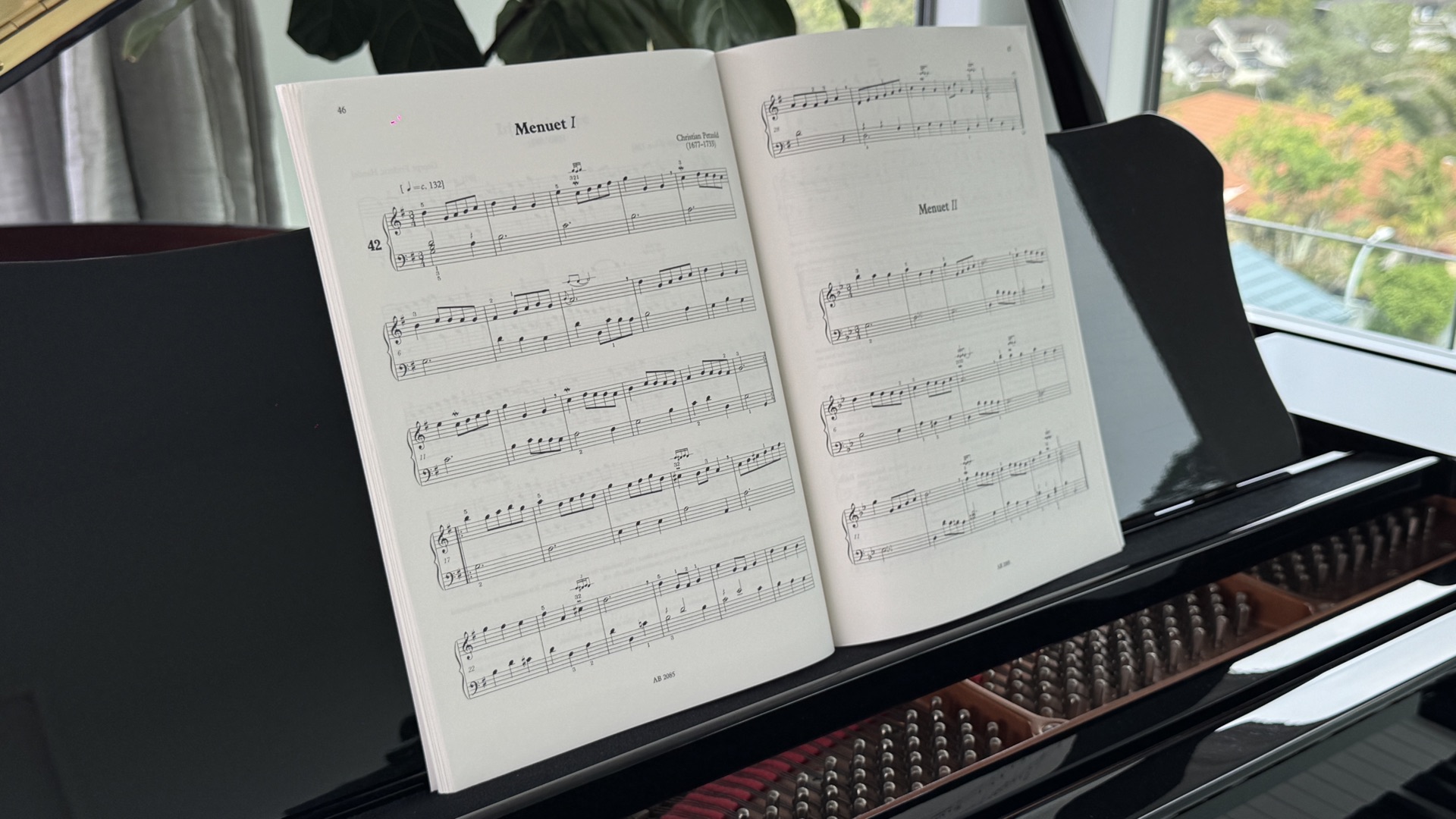
At beginner level, a student reads piano music note by note: A, then C sharp, then E. At intermediate level, something shifts. The brain stops seeing three individual notes and starts recognising a single unit: A major. This process is called chunking, and it is the cognitive upgrade that separates students who accelerate through the intermediate years from those who plateau and quietly give up.
This is Part 2 of a 4-part series on ideal piano training. Part 1 covers the early years and why sight reading must come first. Part 3 covers the advanced years, and Part 4 explores the professional paths a serious pianist can take.
The early years, up to ABRSM Grade 3, are about building foundations: daily sight reading, enjoyment, and natural technique. The intermediate years are about something different.
This stage, covering ABRSM Grades 4, 5, and 6, is where a student stops merely playing notes and begins understanding how music works. It is also where many students either accelerate sharply or lose momentum entirely. The difference almost always comes down to structure.
What Should Already Be in Place
Before moving into Grade 4 to 6 repertoire, an ideally trained student should already have:- Daily sight reading habits built over years of consistent practice
- Natural basic technique and posture that no longer needs constant reminders
- Steady rhythm and reading fluency in simple keys
If daily sight reading has been trained consistently from the start, the student no longer fears new music. A structured system like Piano Tree makes this habit far easier to build consistently.
When the body and reading are stable, the mind becomes free. And that is when real musical understanding can begin.
The Big Shift: From Decoding Notes to Understanding Structure
At intermediate level, the most important development is not technical. It is cognitive.Students who only ever learned note by note are still decoding at Grade 5. They see G, B, D, F as four separate pieces of information to process one at a time. Students who have been introduced to harmony recognise it instantly as G7, a single meaningful unit with a predictable function in the music.
That difference in processing speed compounds across an entire piece. It is the reason some students learn new repertoire in days while others take weeks.
This is where harmony training becomes essential, and where most apps and teaching systems fall short.
Learning Piano Chords Systematically
The introduction of harmony at intermediate level does not mean sitting down with a theory textbook. It means beginning at the keyboard with something practical and immediately useful.Step 1: Major and minor triads in root position
Right hand plays a simple melody. Left hand plays triads in root position. The goal is for reading chord symbols, C, G, Am, F, to become automatic before anything else is added.
At the same time, common progressions that appear everywhere in music start becoming recognisable: V to I, IV to V to I, in both major and minor keys. Students begin seeing patterns inside their ABRSM exam pieces rather than isolated notes. Music starts to make sense.
Step 2: Inversions
Once root position feels comfortable, inversions change everything.
Instead of jumping across the keyboard to reach the next chord, the hand stays in one area. Movement becomes efficient. Sound becomes smoother. Students who understand inversions suddenly sound significantly more advanced, and their motivation increases accordingly.
This is one of the most satisfying turning points in piano development because the improvement is immediately audible.
How Chord Training Directly Improves Sight Reading
This is the insight most students and parents never hear, and it is the core of what makes intermediate training either succeed or fail.When a student understands harmony, their brain starts reading in units rather than individual notes. Instead of processing A, C sharp, E one at a time, they see A major and move on. Instead of working through G, B, D, F individually, they recognise G7.
This is chunking, and it dramatically increases sight reading speed and accuracy.
Students preparing for ABRSM Grade 5 and Grade 6 who still think note by note find the repertoire overwhelming. Students who understand harmony read in larger units and find the same repertoire manageable. The notes are identical. The cognitive load is completely different.
Harmony training and sight reading training are not separate subjects. They reinforce each other directly. Investing in one accelerates the other.
Why So Many Students Quit Around Grade 5
This is one of the most common and painful patterns in piano education, and it is almost entirely avoidable.When a student at Grade 5 has only ever learned exam pieces without building harmonic understanding or maintaining daily sight reading, the repertoire begins to feel overwhelming. Pieces are long. Keys are unfamiliar. Nothing looks like patterns because the student has never been trained to see patterns.
The result is that practice becomes a grind. Progress slows. Motivation disappears. Parents and students conclude that piano is just not for them.
But the problem is not the student. It is the missing foundations.
When harmony and sight reading are trained consistently through the intermediate years, Grade 5 and 6 repertoire feels different. Notes are learned faster because the student recognises the harmonic logic underneath them. Musical expression becomes accessible because energy is not consumed by decoding. Students feel musically independent rather than permanently behind.
Independence is what keeps students going.
What Should Be in Place by ABRSM Grade 6
By the end of the intermediate years, a well-trained student should be able to:- Read fluently in multiple keys without hesitation
- Recognise common chord progressions instantly
- Use inversions naturally and efficiently
- Apply harmony to lead sheets and simple arrangements
- Maintain relaxed, controlled technique
- Understand the structural logic behind the music they are playing
- Prepare efficiently for ABRSM Grade 6 exams
Most importantly, they should no longer just be playing pieces. They should be understanding music.
The Role of Structure in the Intermediate Years
The intermediate years are where discipline and enjoyment must stay carefully balanced. Too much pressure and students disengage. Too little structure and the foundations that make advanced study possible never get built.Daily sight reading, systematic chord and scale training, and thoughtful repertoire preparation working together produce a student who is technically stronger, harmonically aware, and genuinely confident at the instrument.
- Daily: Sight reading on new material
- Daily: Chord and scale training with application
- Most sessions: Repertoire preparation in sections
- Weekly: Lead sheet or harmony application
This is the bridge between beginner and advanced pianist. It does not happen by accident.
See how Piano Tree supports structured sight reading through every stageNext in this series: Part 3 covers the advanced years, from ABRSM Grade 6 to Grade 8, where figured bass enters the picture and sight reading becomes the hidden accelerator that separates efficient learners from those who spend weeks just learning the notes.