
Fifteen minutes at the start of every practice session, split into three blocks: five minutes of flow reading below your level, five minutes on one rotating skill, and five minutes of fresh reading at your working level. Steady pulse throughout, no stopping, and fresh material every day. This is the routine I give my own students, minute by minute.
Why Fifteen Minutes, and Why First?
Fifteen minutes because sight reading is a fluency skill, and fluency is built by frequency, not by heroics. Ten daily sessions beat one weekly marathon every time, and past fifteen to twenty minutes the returns fall off sharply: the extra time is better spent on repertoire. Fifteen is long enough to cover three distinct jobs and short enough that you will actually do it tomorrow as well.First, because of a law I have watched hold in every student I have ever taught, including myself: whatever goes last in a practice session gets skipped. Reading also happens to be the perfect warm-up. The material is easy, so there is no strain on cold hands, but your brain is fully engaged from the first minute.
Sight reading goes first. Left for the end of practice, it quietly stops existing.
Minutes 1 to 5: Flow Reading
Three or four short pieces, one or two levels below where reading feels like work. The only goals are a steady pulse and forward motion: count yourself in, play to the end, next piece. No stopping, no judging, and if a mistake lands, all good, keep going.This block is deliberately almost too easy. You are warming up the eyes, settling the pulse, and casting a vote for the habit. If you find yourself straining anywhere in these five minutes, the level is wrong, not you.
Minutes 6 to 10: The Rotating Block
The middle five minutes attack one specific skill, and the skill changes daily so the whole reading apparatus gets built across a week rather than in one impossible session. A rotation that covers everything:- Monday: Rhythm only: clap, tap or play rhythm-focused material
- Tuesday: Intervals, melodic and harmonic, read as shapes
- Wednesday: Chords and cadences: grab them as single objects
- Thursday: A key you avoid, on very easy material
- Friday: Two independent voices: counterpoint or a simple chorale
- Saturday: A style you never read: lead sheet, folk, film, tango
- Sunday: Free reading for pleasure, easy level, no agenda
The order matters less than the coverage. If you know your weakness, give it two days instead of one, and let the avoidance rule from the pillar guide pick Thursday's key: the one you least want to see is the one to schedule.
Minutes 11 to 15: The Working Level
One or two pieces at the top of what you can read while keeping the pulse alive. This is the performance block: scan the key, the time signature and the hazards for a few seconds, count in, and treat it like the exam or the gig. Eyes ahead, no stopping, recoveries over corrections.When the piece ends, spend thirty seconds being your own teacher: note where it broke and why, because that diagnosis feeds tomorrow's rotating block. Then stop. Resist the urge to polish. The fifteen minutes are over, and repertoire practice, where polishing belongs, is about to begin anyway.
How Do You Adapt It to Your Level?
Beginners keep the same shape with smaller content: block one on single-line melodies, the rotating block on note naming, chopsticks-and-fork geography or clapped rhythms, block three on the easiest two-hand material available. The habit is the curriculum at this stage.Intermediate players run the routine as written. This is the level where the rotation pays most, because the weaknesses are now specific: one key, one rhythm family, one texture.
Advanced readers raise the ceiling rather than the minutes: block three becomes open score, four-voice chorales, transposition at sight, or accompaniment reading with the melody hidden. The fifteen minutes stay fifteen.
What About Busy Days and Missed Days?
The five-minute fallback is block one alone: easy pieces, steady pulse, done. On the extremely busy days, shrink further and keep the streak on a technicality: one page of anything easy, or one single exercise. One cadence from the Cadences pack counts. If you are more of a beginner, one short piece from the Supplementary Pieces counts, or one rhythm exercise, from Rhythm for a single hand or Rhythm 2 for both. The one rule that survives every compression is the level: always sight read easy. A shrunken session keeps the habit alive, and the habit is the asset. What you must not do is skip three days and then "make it up" with a forty-five minute session on Sunday. Fluency does not bank hours; it counts days.Anchor the routine to something that already happens: after the coffee, or as the fixed opening of practice, so it needs no willpower to start. And when you do miss a day, treat it exactly like a wrong note in a piece: no stopping to litigate it, all good, keep going, play tomorrow.
Do not go looking for the perfect practice. Only worry if you are not practicing.
Where Piano Tree Fits
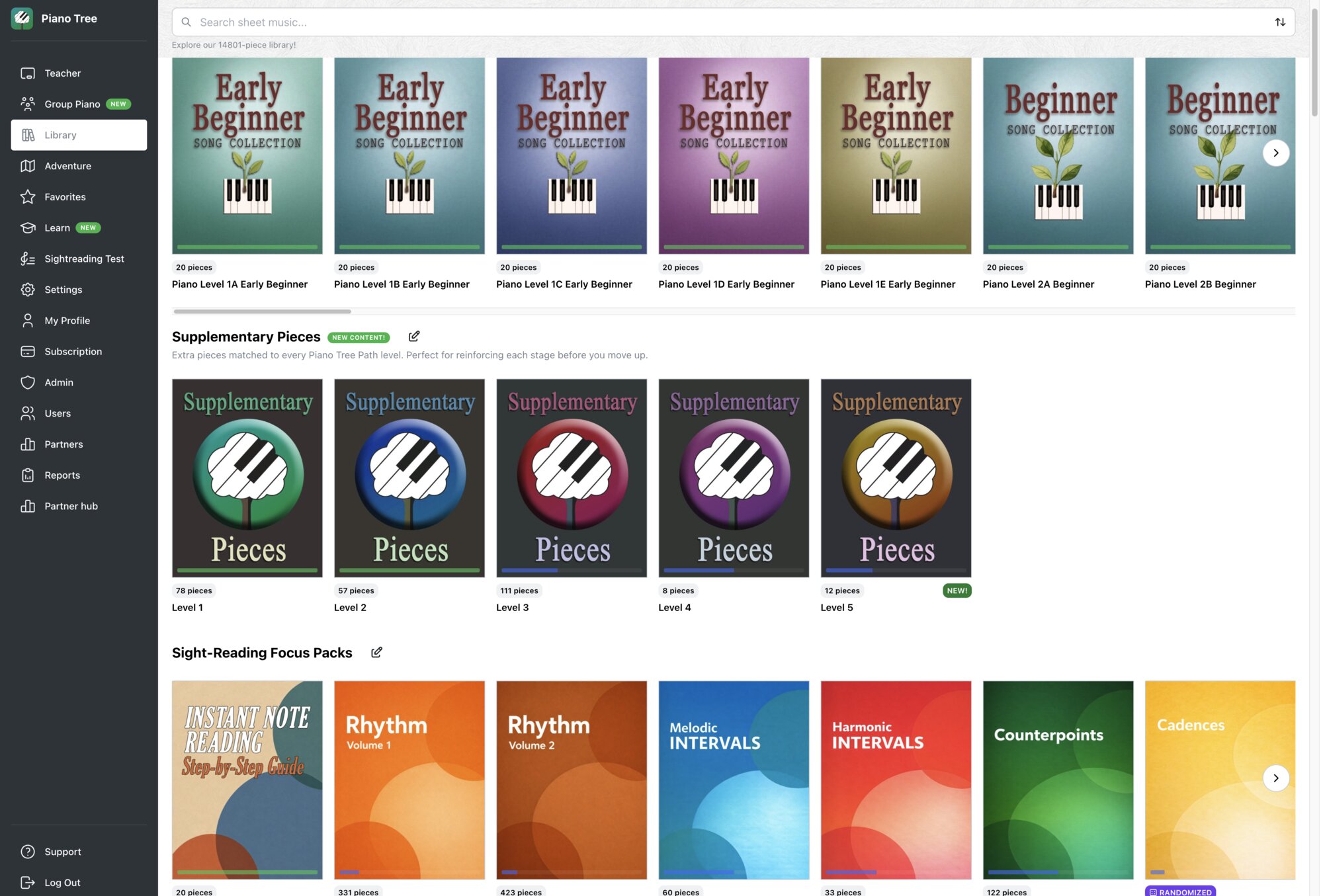
The routine's overhead is finding the right material every day, and that is the part the app removes. Block one is any easy Path level on shuffle, with new pieces added daily so nothing repeats. The rotation maps directly onto the Sight-Reading Focus Packs: Rhythm on Monday, Melodic and Harmonic Intervals on Tuesday, Cadences and the Chords and Scales Training on Wednesday, transposition lock for Thursday's key, Species Counterpoint and chorales on Friday, lead sheets on Saturday. Block three is your working Path level with backing tracks keeping the pulse honest, and the recap at the end does the thirty-second diagnosis with you. And in the rare case that you run out of easy music in the app, tell us, and we will happily compose more for you. Run the 15-minute routine on graded material with Piano TreeCommon Questions
Is fifteen minutes a day really enough to improve?
For the reading skill, yes. Most students who follow this routine at the right level notice the change within four to six weeks. What fifteen minutes will not do is replace repertoire practice; it sits alongside it, which is exactly why the routine is capped rather than open-ended.
Morning or evening?
Whichever one actually happens. The rule that matters is not the hour, it is the position: first inside the practice session, before repertoire, while attention is fresh and the skipping excuse has not woken up yet.
Should the routine change before an exam?
Keep the shape, tilt the content: block three becomes exam-format tests at the exam's notice time, and the rotating block leans on the weaknesses your last mock exposed. What examiners reward is the same thing this routine builds, and we covered it in what ABRSM examiners are listening for.If I repeat a piece or end up drilling one bar, am I still sight reading?
You are still working on your music, and that is the part that counts. Reading a piece two or three times is fine. And if one bar pulls you into drilling it, let it: patterns you repeat and record in memory pay off in future reading, because music repeats itself constantly, and some styles, Baroque above all, are built from recurring figurations. Drill a group of four sixteenth notes in a Bach piece today and you will meet it again in another Bach piece next month, because composers repeat themselves, and the same chord tends to receive the same figuration. If the memorising worry still nags you, transpose the bar to another key and drill it there, which turns the repetition straight back into reading; Piano Tree's transposition function does that in one tap. Chasing the perfect practice is the only real mistake here.
Can I do thirty minutes instead?
You can, but past fifteen to twenty minutes most students are recycling attention, not building skill. If you have thirty to give, a better split is this routine plus fifteen extra minutes of repertoire, or a second five-minute flow block much later in the day, which counts as a second frequency vote.
The Short Version
Fifteen minutes, first thing in the session, every day: five easy and flowing, five on one rotating skill, five at your working level with a thirty-second diagnosis at the end. Shrink it to five on bad days, never binge to catch up, and let the rotation make sure every part of the reading skill gets its turn across the week. The routine is small on purpose. Small is what survives.
Part of the Piano Tree sight reading series. Continue with How to Practice Piano Sight Reading, Should You Stop When You Make a Mistake While Sight Reading? and How to Stop Looking at Your Hands When Reading Piano Music.