
Piano sight reading after Grade 8: which diplomas still test it (ABRSM, Trinity, LCM, RCM, AMEB), and how to keep reading at diploma level.
Here's something most students don't realise until they get there: after Grade 8, almost no piano diploma tests sight reading any more. ABRSM, Trinity, RCM and AMEB diplomas are about the recital. Only LCM still includes a sight reading test as standard. So the exams stop asking at exactly the point where reading starts to matter most: auditions, accompanying, chamber music, and learning a 35-minute programme in months instead of years.
This post is part of our sight reading series. For the whole ladder, from first notes to Grade 8, see Piano Sight Reading Levels Explained.
Diploma Sight Reading at a Glance
| Board | Diplomas | Sight reading? | What the exam is |
|---|---|---|---|
| ABRSM | ARSM, LRSM, FRSM (Music Performance) | No | A recital. LRSM and FRSM add a written or spoken piece of work about the programme |
| Trinity College London | ATCL, LTCL, FTCL (Music Performance) | No | A recital, with a programme form (ATCL, LTCL) or programme notes (FTCL) |
| LCM (London College of Music) | DipLCM, ALCM, LLCM (Performance) | Yes, in the standard format: 15%, with one minute to prepare | Performance 70%, discussion 15%, sight reading 15%. The Recital format lets you choose sight reading or discussion; the Concert format is performance only |
| RCM (Royal Conservatory, Canada and USA) | ARCT in Piano, Performer | No | Repertoire only. Sight reading is last tested at Level 10 |
| AMEB | AMusA, LMusA | No | AMEB sight reading tests apply to Grades 1 to 8 only |
If you want a diploma that rewards your reading, LCM's standard format is the one to look at. For everyone else, sight reading becomes a skill you keep for yourself, not for the examiner. That's not a reason to stop. It's the reason to keep going on your own terms.
What Changed at ABRSM
Until 2024, ABRSM's DipABRSM and LRSM performance diplomas included a Quick Study: a short, unseen piece played after five minutes' preparation. It was often described as a double-length sight reading test, and for many candidates it was the hardest part of the exam.That has gone. ABRSM withdrew the DipABRSM in Music Performance, and the new LRSM and FRSM, from 2024, are digital: you submit a filmed performance and a written or spoken piece of work connected to it. The ARSM, which sits between Grade 8 and LRSM, was already a performance-only diploma, and it hasn't changed. So a pianist can now go from Grade 8 to FRSM without ever being asked to read a note they haven't practised.
If Your Diploma Has a Sight Reading Test
LCM's standard DipLCM, ALCM and LLCM in Performance still include sight reading, worth 15% of the exam. You get one minute to look at a short, unseen piece, and you may try out parts of it. In the Recital format, you choose sight reading or discussion, for 20%. The Concert format has no sight reading at all.LCM doesn't publish a set standard for the diploma test, but at these levels you should expect real repertoire: a page or so, with the textures, keys and rhythms of Grade 8 music and beyond. Everything in this guide applies, and the one minute is twice what you had at Grade 8. Use it the same way: the map first, then the hardest bar.
What Reading Has Done for Me
Becoming a good sight reader has been one of the most valuable skills I've developed as a musician, and its benefits have gone far beyond being able to play unfamiliar music.At university, reading music fluently made studying so much easier. Instead of spending hours working out notes and chords, I could focus on what really mattered: understanding the music, analysing the composition, and learning from it.
Later, when I started working as a film composer, reading became just as important, in a different way. I needed to look at scores by other composers, understand what they were doing, and absorb as much as possible, quickly and confidently. Being able to read a score without constantly stopping to decipher it is incredibly valuable.
This is something people often misunderstand about sight reading. At a certain point, you stop reading individual notes and chords, and you begin reading the language of music itself: patterns, harmonic progressions, musical gestures, structures, and the composer's intentions. It's very like learning a spoken language. When you first learn to read, you struggle with letters and words. Eventually you stop thinking about them and simply understand the meaning. Music works much the same way.
Teaching piano is another place where reading has been essential. In fact, it helped me make a living when I needed it most. Students arrive with all sorts of music: different composers, styles and levels, and sometimes pieces you've never even heard. You can't prepare every piece in advance. You have to sit down, open the score and play. Piano teachers are sight reading constantly, whether they realise it or not.
But perhaps the greatest benefit has nothing to do with university, professional work or teaching. It's the simple pleasure of making music. Today I can open a book of piano music, find a piece I've never played, and just enjoy it. I don't need weeks of learning every note before I can hear what the composer wrote. I can explore out of curiosity, move from one piece to the next, and discover beautiful music I might never have met otherwise.
For me, that's the real reward of becoming a fluent reader. It gives you freedom: to explore, to learn, to understand, and most of all to enjoy music without so many barriers between you and the score. Sight reading isn't just a skill that makes you a better pianist. It lets you experience more music for the rest of your life.
Why You Need It Anyway
- Auditions. Many university and conservatoire auditions include sight reading, even when the diploma you're holding didn't test it.
- Learning your programme. A diploma recital is 30 to 55 minutes of music. A strong reader gets the notes in days and spends the months on the music.
- Accompanying and chamber music. Most professional piano work involves other people: singers, instrumentalists, choirs, exams. The music arrives a week before, and nobody waits for you.
Six Things to Practise at Diploma Level
1. Read below your level, and read a lot
The rule doesn't change after Grade 8: your daily reading should be easier than your pieces. If your diploma programme sits at Level 20, read at Levels 15 to 18. To move up a reading level, a student needs to read many pieces at the level they are on, something closer to two hundred than four. Sight reading should always feel on the easier side, the same as reading a book. Imagine a story where every word came from a thesaurus and you had to look each one up: it would take forever. A few new words here and there are fine, and actually fun.
2. Read harmony, not notes
At this level a bar can have twenty notes in it, and you can't read them one by one. Read the bass and the chord, then the figure the chord is decorated with. A page of Bach or Beethoven often holds no more than a handful of harmonies, each one spread out in a pattern. Find the pattern once and you've read the bar.
3. Separate the layers
Diploma music is usually written in layers: a melody, an accompaniment and a bass, often with two of them in one hand. Before you play, decide which layer is the melody and which notes are only filling in. Then let the filling-in be light and the melody sing, even on a first reading.
4. Look for what repeats
Composers repeat themselves far more than students expect: a figure across a bar, a phrase a step higher, a whole section coming back. The more you find in your preparation, the less there is to read. The same skill makes learning a diploma programme much faster.
5. Read ahead by a phrase
At Grade 8, reading one bar ahead is enough. At diploma level, aim for the end of the phrase, so you see where the harmony is heading before you get there. Practise with Piano Tree's read-ahead set to a full bar or more.
6. Accompany, and play with other people
Nothing improves reading faster than music that won't wait. Accompany singers and instrumentalists, play duets, read through chamber music with friends. If no one is around, play the piano part along with a backing track.
Reading a Real Piece
Here's how I'd read the middle section of the slow movement of Beethoven's "Pathétique" Sonata, Op. 13, which is Part 2 of the Adagio cantabile at Level 17A in Piano Tree.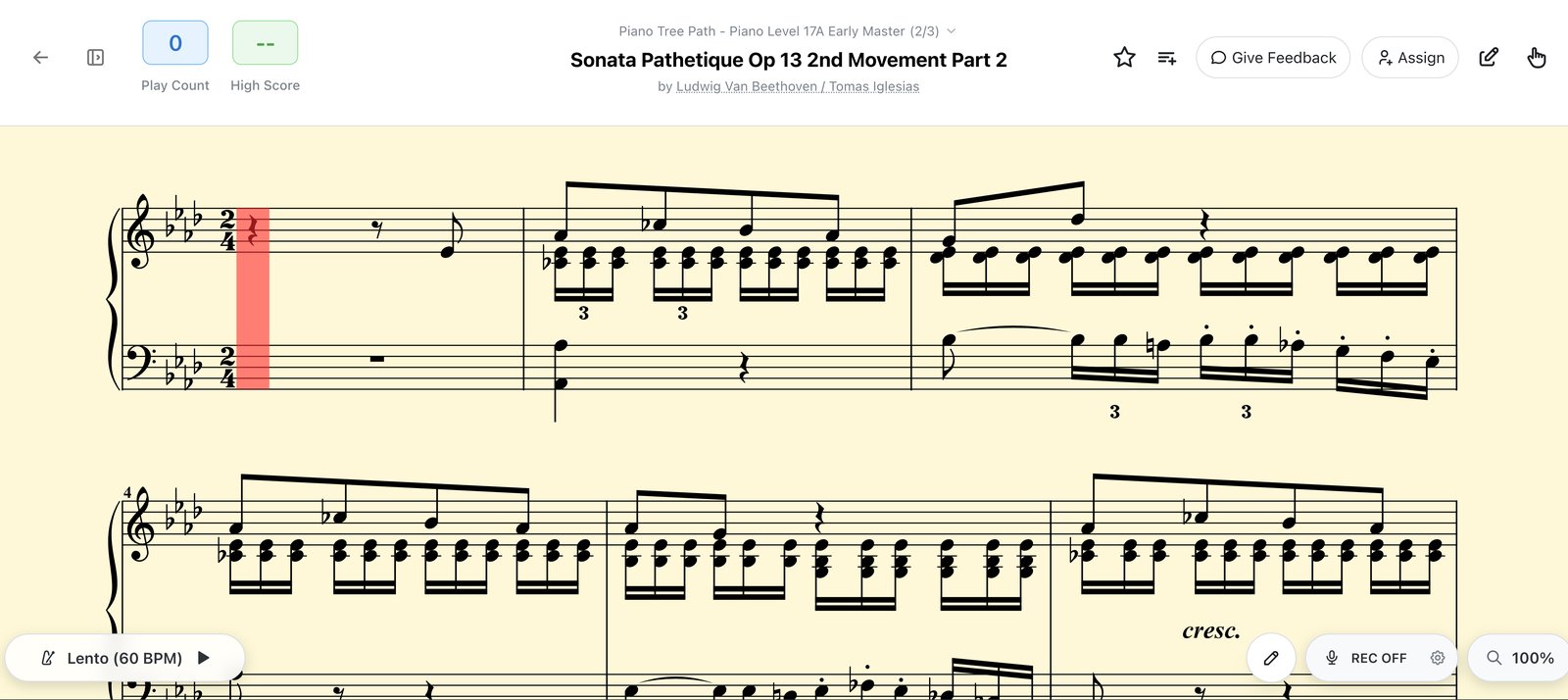
Beethoven, Sonata "Pathétique", Op. 13, second movement (Part 2), Level 17A: a melody and an accompaniment of repeated chords, both in the right hand, with the left hand answering underneath.
- Key: four flats, so A flat major on paper. But the melody's first bar has a C flat in it, and that turns A flat major into A flat minor. This is the dark middle section of the movement, and the flats written in front of the notes tell you so before you play a note.
- Time: 2/4, slow, at 60 crotchets a minute. The inner chords move in triplet semiquavers, three to every quaver, so the bar holds twelve of them. I feel the quaver beat and let the triplets fill it, rather than counting every chord.
- Three layers in two hands: the right hand plays the melody on top, in quavers, and the repeated chords underneath it, at the same time. The left hand plays the bass. The chords repeat the same shape three times or more, so I read each shape once and let the hand keep it.
- The upbeat: the first bar is silent until its last quaver, a single E flat in the right hand. I count the bar in my head and come in on that note.
- What repeats: bar 4 has the same melody as bar 2, A flat, C flat, B flat, A flat, and bar 6 brings it back again, with cresc. Three statements of one idea.
- The hard part: bar 3. The melody stops, and the left hand answers with staccato triplet semiquavers climbing up, with accidentals on the way. That's the bar I'd look at longest, because it's where the two hands stop doing the same thing.
- Tempo: I keep it at 60. The triplet chords stay soft and even, and the melody sings above them.
Read like this, the section is one simple melody, stated three times, over a pattern of chords that hardly changes, with a bass that answers it. That's what diploma-level reading is: not more notes per second, but seeing the structure fast enough to play the music, not the notes.
A 20-Minute Daily Routine at Diploma Level
- 3 minutes: Scales, arpeggios or a chord progression in a key you find hard to read. Change key every day.
- 12 minutes: Read a page or two of new music, a level or two below your pieces. Look for the harmony and the repeats first, then play it through without stopping.
- 3 minutes: Read a short piece in open score or four parts, such as a Bach chorale.
- 2 minutes: Go back to the hardest moment. Was it the texture, the key or losing your place? That's tomorrow's focus.
How to Keep Reading at Diploma Level in Piano Tree
Read at Levels 17 to 20
Path Levels 17 to 20 are diploma-standard reading: real Baroque, Classical and Romantic repertoire, with the textures, keys and lengths you'll meet in your programme. If you mastered Levels 14 to 16 for Grade 8, start at 17 and work up. As always, read a level or two below your pieces, not at them.
Not sure where you are? The free Sight Reading Test gives you a Piano Reading Level and tells you which level to start from. The test to aim for after Grade 8 is Master (Levels 17 to 20).
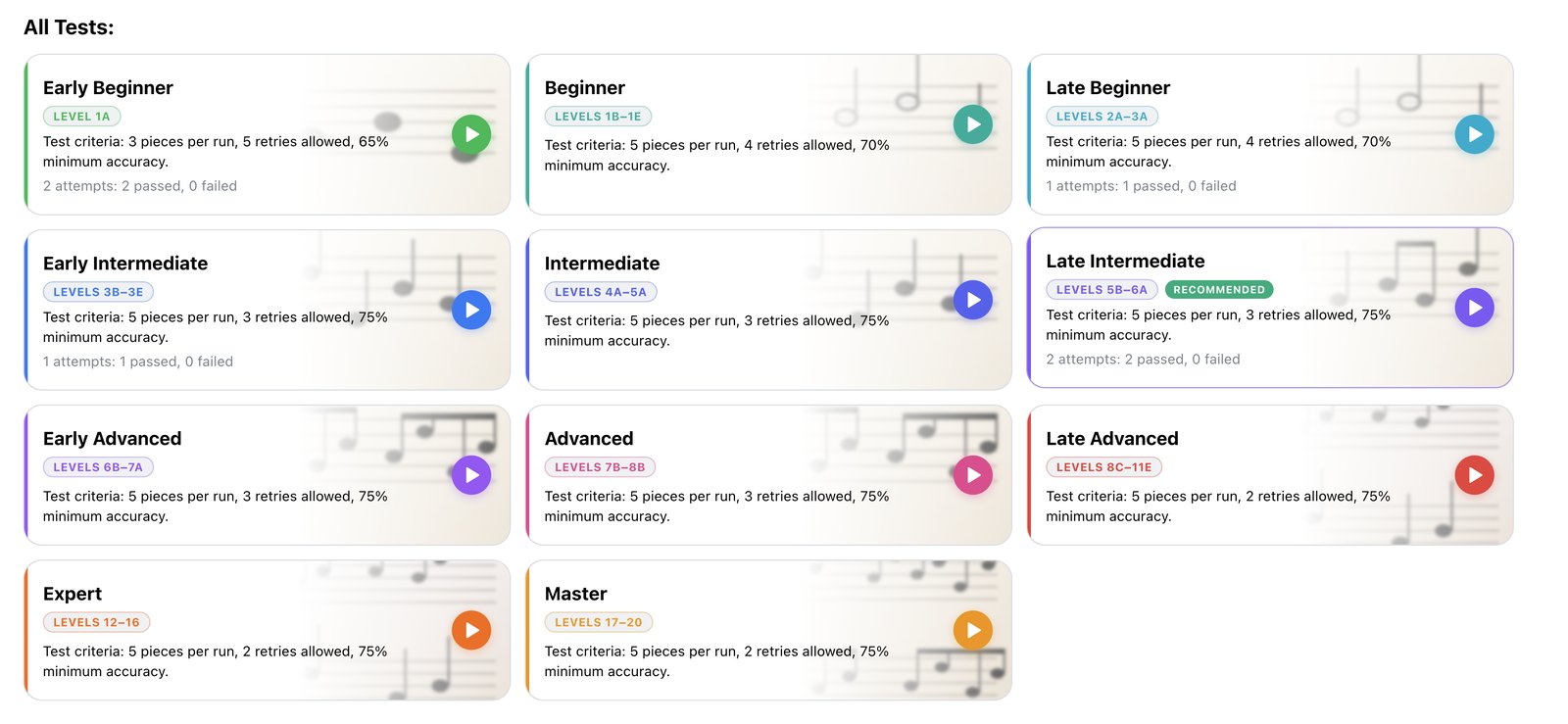
The free Sight Reading Test. Each of the eleven tests covers a band of Path levels and gives you a Piano Reading Level.
Read enough pieces at each level
Each Path level holds around 100 pieces, but I believe a student needs about 200 per level, sub-levels included. That's why we added the Supplementary Pieces: another 100 pieces at each level. Long pieces are split into parts, so you can read a sonata movement one section at a time.
Read in four parts and in open score
Bach's 371 chorales are in the Baroque section, in four parts and in open score, and they are the best reading practice there is at this level: four voices, real harmony, and nowhere to hide. I've written more in why every pianist should practise Bach chorales.The tools that help most
- Read ahead: set it to a full bar or more, so you're always reading the next phrase while you play this one.
- Transposition and key lock: move any piece into a key you find hard to read, and lock the key so everything you open stays there.
- Accompanying: play the piano part while the backing track plays the tune, the closest thing to playing with other musicians when you're practising alone.
Piano Tree is a piano sight reading app built by piano teachers: 25,000+ graded pieces, real-time feedback by MIDI or microphone, from first notes to diploma level. The free plan includes hundreds of pieces and unlimited sight reading tests, with no credit card.
Start reading today: try Piano Tree freePieces at Diploma Standard
If you're preparing a diploma programme, you'll find music at that standard at Levels 19 and 20 in the Path. Level 19 is the bridge from Grade 8, and Level 20 is diploma standard. As a reading level, these are the top of the ladder, which is why I'd read below them and learn your programme from them. A few examples:| Piece | Level |
|---|---|
| J. S. Bach: Prelude and Fugue in C minor, BWV 847 | 19A |
| Chopin: Nocturne in E flat, Op. 9 No. 2 | 19A |
| Schubert: Impromptu in A flat, D. 899 No. 4 | 19B |
| Rachmaninoff: Prelude in C sharp minor, Op. 3 No. 2 | 19C |
| Mozart: Fantasia in C minor, K. 475 | 19E |
| Beethoven: Sonata in A flat, Op. 26 (complete) | 20D |
| Chopin: Berceuse, Op. 57 | 20D |
| J. S. Bach: Prelude and Fugue in A flat, BWV 886 | 20E |
| Beethoven: Sonata "Pathétique", Op. 13, first movement | 20E |
| Brahms: Rhapsody in G minor, Op. 79 No. 2 | 20E |
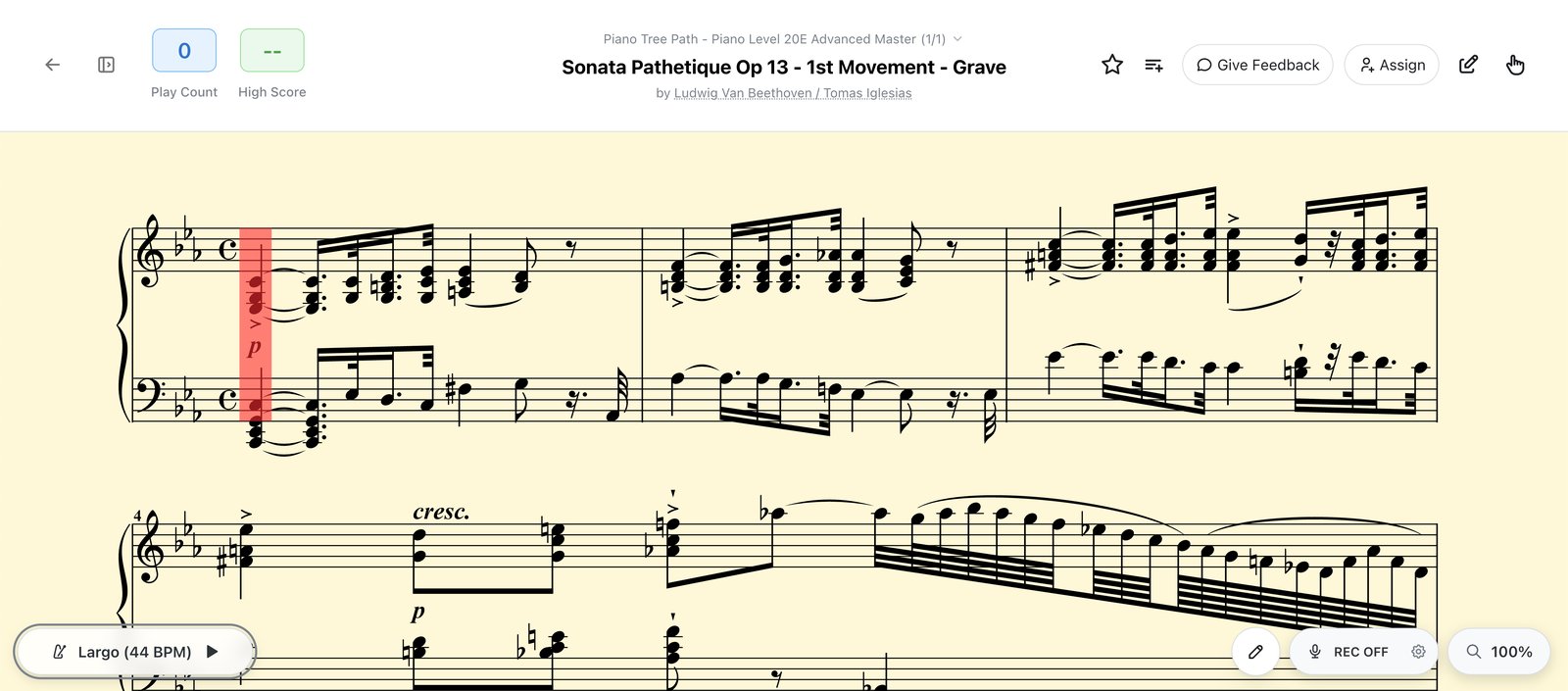
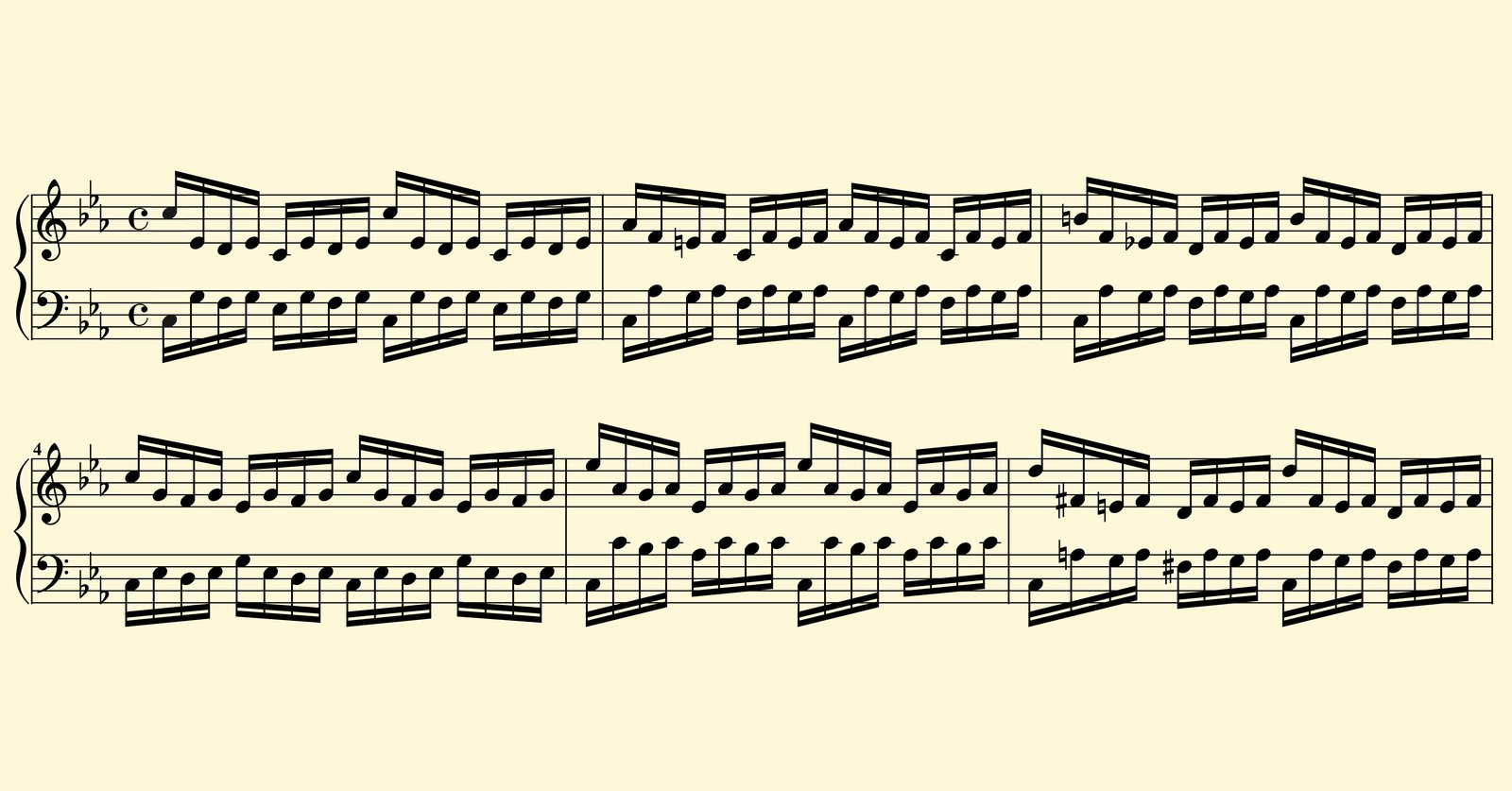
Beethoven, Sonata "Pathétique", Op. 13, first movement, open in Piano Tree at Level 20E: the Grave introduction, with its dotted rhythms, full chords and a fast run down the keyboard in bar 4.
Common Mistakes After Grade 8
- Stopping reading because the exam stopped asking. Reading fades fast without daily use.
- Reading at the level of your programme. Read a level or two below it, and read a lot.
- Reading every note. Read the harmony and the pattern, then the notes.
- Playing every layer at the same volume. Find the melody before you start.
- Only reading solo music. Accompany, play duets, read chamber music.
Common Questions
Do piano diplomas include sight reading?
Mostly not. ABRSM's ARSM, LRSM and FRSM, Trinity's ATCL, LTCL and FTCL, RCM's ARCT and AMEB's AMusA and LMusA have no sight reading test. LCM's DipLCM, ALCM and LLCM in Performance include it in the standard format, worth 15%, and as an option in the Recital format.
Does ABRSM still have a Quick Study?
Not in its performance diplomas. The Quick Study was part of the DipABRSM and the old LRSM. ABRSM withdrew the DipABRSM in Music Performance, and the new LRSM and FRSM, from 2024, replace the Quick Study and viva voce with a written or spoken piece of work about the programme.
How long do I get to prepare in an LCM diploma?
One minute, and you may try out parts of the piece before you play it.
Which Piano Tree levels are diploma standard?
For reading, Levels 17 to 20, the Master test band. For diploma repertoire, Level 19 is the bridge from Grade 8 and Level 20 is diploma standard.
Do I need sight reading for university auditions?
Often, yes. Many university and conservatoire auditions include a sight reading test, so check the requirements of each place you apply to, and keep reading in the months before.
How much should I read after Grade 8?
About twenty minutes a day, a level or two below your pieces. It keeps your reading growing, and it pays for itself in how fast you learn your programme.
Sources and How We Checked
- ABRSM, Music Performance Diplomas from 2024, Qualification Specification: LRSM and FRSM structure. ABRSM press release on the new diplomas: withdrawal of the DipABRSM in Music Performance, ARSM unchanged. ABRSM Performance Diploma Syllabus 2022: the Quick Study in the previous DipABRSM and LRSM.
- Trinity College London, Music Performance Diploma Requirements (ATCL, LTCL and FTCL).
- London College of Music Examinations, Music Diplomas syllabus: DipLCM, ALCM and LLCM in Performance formats, sight reading weighting and preparation time.
- The Royal Conservatory, Piano Syllabus, 2022 Edition: ARCT in Piano, Performer requirements and Level 10 sight reading.
- AMEB, Piano Syllabus 2026: sight reading tests apply to Grades 1 to 8.
- All checked in November 2026. Piano Tree is not affiliated with ABRSM, Trinity College London, LCM, RCM or AMEB.
Part of the Piano Tree sight reading series. Continue with Grade 8 Piano Sight Reading, Piano Sight Reading Levels Explained and why every pianist should practise Bach chorales.