
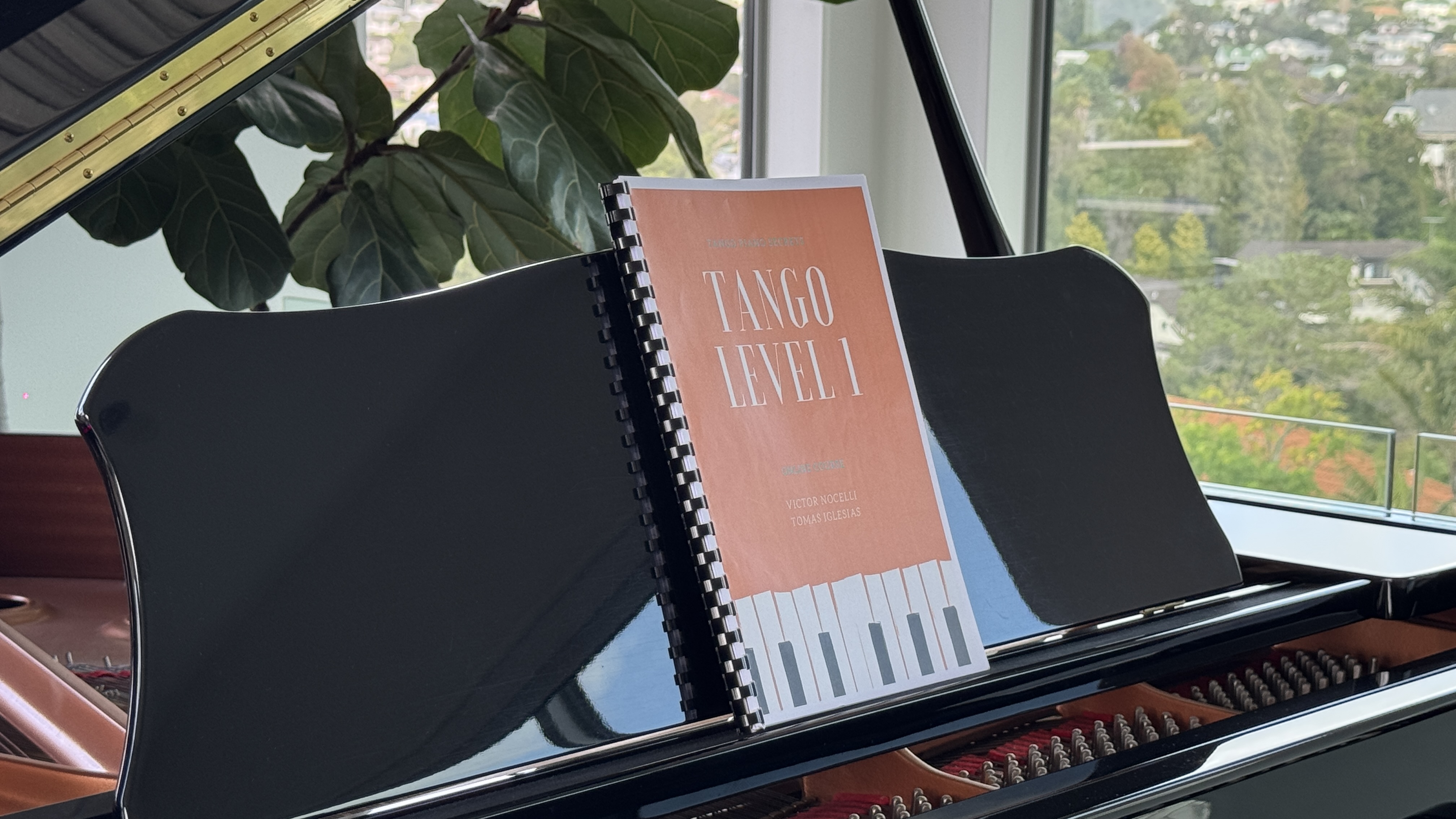
The tango pianist is one of the most complete musicians in any popular genre. Not just a keyboard player, not just an accompanist, not just a soloist. All three simultaneously, moving between roles within a single piece depending on what the music and the ensemble demand in that moment.
I have taught many pianists who came to tango from a classical background, and the transition is always revealing. The technical foundations are there. The musical intelligence is there. But tango demands something specific that classical training rarely develops: the ability to listen to a soloist, read their rubato and physical gestures in real time, and respond without breaking the rhythmic fabric that the orquesta depends on. That combination of chamber musician sensitivity and rhythmic resilience is what separates a tango pianist from a pianist who plays tango.
This post is part of the Piano Tree path series. For related paths, see The Jazz Piano Path, The Composer Path, and How to Learn Harmony at the Piano.
Who Is the Tango Pianist?
The tango pianist occupies a unique position in the orquesta típica. They must be, simultaneously:- An experienced chamber musician, listening and responding to what is happening around them at every moment
- A sensitive accompanist to singers, capable of reading the soloist's rubatos, physical gestures, and interpretative choices in real time
- An improviser with solid functional harmony knowledge, creating countermelodies and filling the spaces between phrases
- A competent sight reader, equally at ease with fully notated scores and with lead sheets in chord symbol and melody format
- A soloist with the orchestration skills to arrange a tango melody for solo piano on the spot
The tango pianist does not just play the notes. They hold the whole ensemble together while making it sound like they are doing nothing at all.
This combination of skills does not appear overnight. It is built in stages, each one deepening the foundations of the previous. The four-level structure described in this post is the most direct path to developing it.
What You Need Before You Start
Tango is not a beginner's genre. Before entering serious tango piano study, a player should already have:- Solid functional harmony knowledge: major and minor triads, seventh chords, common progressions, the ii-V-I and its variations
- Basic improvisation ability: the capacity to harmonise a melody in real time using available chord knowledge
- Confident sight reading in both standard notation and lead sheet format
- Some experience playing with other musicians, whether classical ensemble, jazz, or any other collaborative context
From Classical Pianist to Orquesta Típica
A few years ago, a student came to me with a solid classical background, around ABRSM Grade 6, good technique, reliable reading, and a genuine love of tango from having grown up hearing it at home. She wanted to play in an orquesta típica. That was her specific, concrete goal.The first thing I noticed was what classical training had not given her: rhythmic placement. In classical music you can lean into phrases, breathe with the music, let the tempo flex. In tango, the rhythmic skeleton is sacred. The bandoneon players, the bassist, the violins, they are all locking into a pulse that cannot waver. The pianist has to be part of that lock while simultaneously responding to everything the soloist does on top of it.
We worked through the four levels methodically. The first months were about internalising the basic orchestration roles and the core accompaniment patterns. The marcato, the síncopa, the yumba. She practised them until they were completely automatic, until her hands could hold the rhythmic structure without her mind having to supervise every beat.
By the time we reached level three, something had shifted. She was no longer thinking about the accompaniment patterns. She was listening. Listening to where the melodic space opened up, hearing where a countermelody could enter without crowding the main voice, feeling when to pull back and let silence do the work.
After about fourteen months of this work, she auditioned for a local orquesta típica. She got the position. The director told her afterwards that what had impressed him was not her technique but her feel for the genre: the way she listened, the way she left space, and the way she made every other player in the ensemble sound better.
That is the measure of a tango pianist. Not how much you play, but how well you serve the music and the musicians around you.
Level 1: Orchestration Roles and Functional Harmony
The first level establishes two things simultaneously: the basic orchestration vocabulary of the genre and the harmonic foundations that make everything else possible.Orchestration roles
The piano in a tango ensemble can fulfil several distinct roles depending on what the arrangement requires. At level one, the focus is on the primary roles: rhythmic support, harmonic filling, and basic melodic doubling. The student must understand when each role is appropriate and how to switch between them cleanly.
Functional harmony applied to tango
Tango harmony is rooted in the European Romantic tradition but filtered through Argentine musical sensibility. The chromatic voice leading, the use of diminished seventh chords as passing harmonies, the particular quality of the dominant with added tensions: all of this must be understood functionally, not just recognised by ear.
- Daily: Harmonic progressions common to tango in all keys: I-IV-V, ii-V-I, chromatic approaches to the tonic
- Daily: Basic orchestration roles: rhythmic, harmonic, melodic. Practice switching between them over a simple tango form
- Regular: Listening: classic orquesta típica recordings with focused attention on the piano's role within the ensemble
- Regular: Simple lead sheet realisation: melody plus chord symbols, applying the orchestration roles studied
The characteristic elements of the genre are also introduced at this level: the particular rhythmic vocabulary of tango, the phrasing conventions, the relationship between the piano and the other instruments in the ensemble texture.
Level 2: Accompaniment Models and the Lyric/Rhythmic Duality
Level two deepens everything from level one and introduces the specific accompaniment models that define tango piano writing.The accompaniment models
The main patterns that every tango pianist must master:
- Marcato: the fundamental four-beat accompaniment, the rhythmic backbone of the orquesta
- Síncopa: syncopated figures that create forward momentum and rhythmic tension
- 3-3-2: the characteristic rhythmic displacement pattern fundamental to tango feel
- Yumba: bass-chord alternation that gives tango its particular weight and forward drive
- Marcato sincopado: a combination of the marcato and síncopa that adds complexity to the rhythmic texture
Each of these must be practised until fully automatic. They should require no conscious attention, freeing the mind completely to focus on listening.
When the accompaniment patterns are truly internalised, the pianist stops thinking about what their hands are doing and starts thinking about what the music needs.
The lyric/rhythmic duality
This is one of the defining characteristics of tango piano playing and one of the most difficult concepts to develop. At any given moment, the pianist must hold both of these simultaneously:
A rhythmic dimension that locks in with the ensemble and provides the structural backbone. And a lyrical dimension that responds to the soloist, breathes with the phrases, and shapes the musical line with genuine expressive intention.
The study of phrasing and articulation criteria at this level focuses specifically on how these two dimensions interact: how to maintain rhythmic integrity while allowing genuine musical expression, and how the accompaniment style should shift depending on whether the music is in a more rhythmic or more lyrical passage.
Level 3: Secondary Melodic Roles and Countermelodies
Level three consolidates everything from the previous levels and introduces the more advanced creative skills that distinguish a genuinely musical tango pianist from a technically capable one.Secondary melodic roles
Beyond the primary orchestration roles studied at level one, the tango pianist must develop the ability to take on secondary melodic functions within the ensemble texture. This means understanding the harmonic and melodic space that is not occupied by the main melody and being able to fill that space intelligently.
Creating countermelodies
Tango countermelodies are not random melodic ideas. They are constructed with specific criteria: they must complement the main melody without competing with it, they must be harmonically coherent with the accompaniment, and they must feel like a natural extension of the style rather than an imposition from outside it.
Tango pianists are recognised as masters of ornamentation and enclosures, the approach of a target note from both above and below. This vocabulary, which is also fundamental to bebop jazz, is studied in depth in Piano Tree's dedicated Sight-Reading Focus Pack on enclosures. The connection between jazz and tango ornamentation is not coincidental: both traditions developed similar solutions to similar melodic problems.
Playing between phrases
One of the most characteristic features of tango piano playing is what happens in the spaces between the main melodic phrases: the brief melodic ideas, the harmonic colours, the rhythmic figures that fill the silence without overcrowding it. Developing the instinct for this, knowing when to play, what to play, and equally importantly when to stay silent, is a major focus of level three work.
Level 4: Arranging on the Fly
Level four is the point at which everything that has been studied becomes genuinely creative.The goal of this level is the ability to take any tango, knowing only the melody and the harmony, and arrange it in real time for either solo piano or as accompaniment, sounding as if the arrangement had been written out in advance.
This is not improvisation in the jazz sense of spontaneous melodic invention. It is spontaneous orchestration: the ability to draw on all the roles, patterns, and vocabulary developed across the previous three levels and deploy them intelligently in response to what the music requires in each moment.
When you reach level four, you are no longer playing tango. You are thinking in tango. The language has become yours.
- Regular: Solo piano arrangements of complete tangos worked out in real time from lead sheet only
- Regular: Ensemble playing: apply all four levels in context with other musicians, responding to what they do
- Regular: Listening and analysis: transcribe or analyse specific piano arrangements from recordings
- Ongoing: Repertoire building: accumulate a working repertoire of tangos at each style and period
A pianist who has worked through all four levels with consistency and intelligence is ready to audition for a tango ensemble. They will not just be technically equipped. They will think and listen like a tango musician.
Why Sight Reading Is Non-Negotiable
In a professional tango context, sight reading is not a theoretical skill. It is a practical daily requirement.Tango musicians work from two types of material: fully notated scores that specify every detail of the arrangement, and lead sheets that give only melody and chord symbols and leave the realisation entirely to the performer. The tango pianist must be equally confident with both.
Reading a fully notated tango score at performance tempo requires the same fluency as reading any other complex piano music. Reading a lead sheet and realising it convincingly in tango style requires harmonic knowledge, orchestration instinct, and the accumulated vocabulary of all four training levels working simultaneously.
There is also the chamber musician dimension. In rehearsal, tango pianists often encounter new material and are expected to play it at tempo from the first reading. The ability to do this without slowing the ensemble down is a professional baseline expectation.
Piano Tree builds this fluency through structured daily practice across a wide range of styles and difficulty levels. For tango students specifically, the lead sheet realisation format and the enclosures focus pack are directly relevant to the skills described in this post.How Piano Tree Supports Tango Development
Several elements of the Piano Tree training path connect directly to the tango pianist's development.The sight reading library builds the fluency that professional tango performance demands, across both notated scores and lead sheet formats. The harmony training, which progresses from basic triads through seventh chords and functional progressions, establishes the harmonic foundations that level one of the tango path requires. The enclosures focus pack develops the ornamental vocabulary that is as fundamental to tango as it is to bebop.
The tango piano path is long and genuinely demanding. For those who want to go deeper into tango piano with dedicated online courses taught by Victor Nocelli, visit Tango Piano Secrets. The courses cover the four-level methodology described in this post in full detail, with video lessons, exercises and guided repertoire study. But every stage of it is musically interesting, and the language you develop along the way, the rhythmic precision, the chamber musician listening, the spontaneous orchestration, transfers directly to every other musical context you will ever work in. Build the sight reading and harmony foundations that tango piano demands with Piano TreeThis post is part of the Piano Tree path series. Explore the other professional directions: The Jazz Piano Path, The Composer Path, The Church Pianist Path, and How to Become a Piano Teacher.